NAB 2026 roundup: Putting a studio in a suitcase
By Conrad Curtis | Production and Partnerships Lead at Beeble
NAB this year didn't feel like a glimpse of the future so much as a confirmation of something already underway. Across the show floor, in meeting rooms, and in improvised spaces off-site, the same idea kept surfacing in different forms: virtual production is no longer defined by stages, hardware, or fixed pipelines, but by how fluidly you can move between them.
What we saw, and what we built, pointed to a new baseline where production, post-production, and real-time tools are no longer separate phases but part of a continuous, iterative process. At the center of that shift is a simple but powerful concept: if your tools are flexible enough, your entire production can move with you.
A portable virtual production studio in a hotel suite
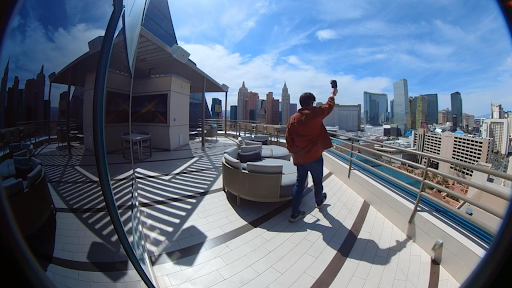
The clearest expression of that idea came not inside the Las Vegas Convention Center, but a short distance away, in a terrace suite at the MGM Grand, where we set out to answer a straightforward question: how much of a virtual production pipeline can you realistically compress into a portable setup without losing creative control?
Over the course of a few hours, the team from District Cinema transformed the suite into a fully functioning studio — not as a stunt, but as a working environment where capture, relighting, and inspiration could happen in real time and continue seamlessly into post.
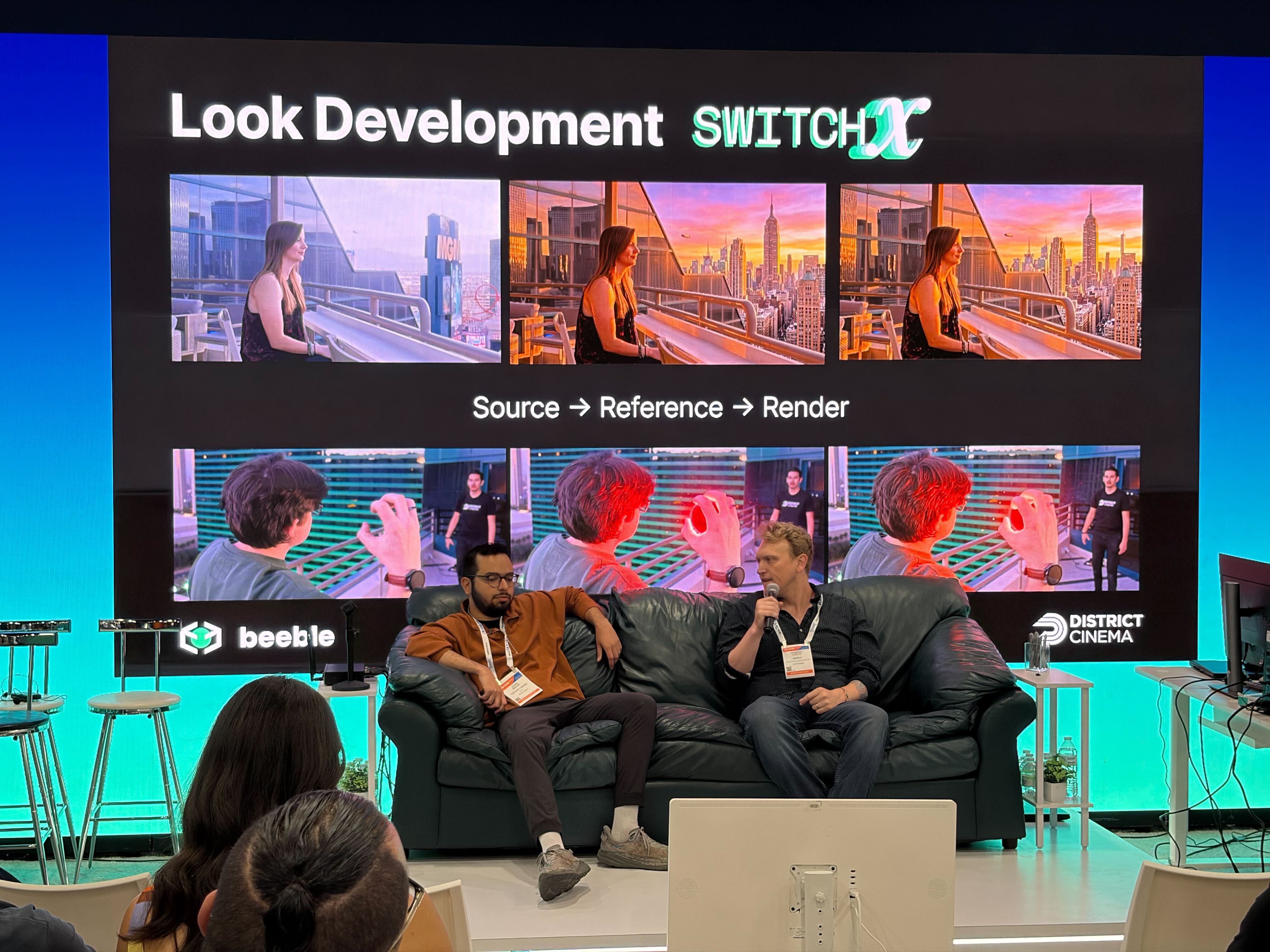
What made this possible was not a single piece of technology, but the way various technologies worked together, particularly through SwitchX, which allowed us to treat lighting and comp as something that could evolve after the moment of capture rather than being locked in on set. Instead of being limited by our environment, we were able to focus on performance and composition, knowing that the look could be refined later with a level of control that traditionally required far more infrastructure. In that sense, our "studio in a suitcase" idea is less about portability alone and more about decoupling creative decisions from physical constraints.
Spatial workflows and the XGRIDS panel
That same philosophy carried into our session with XGRIDS, where the conversation shifted from portability to spatial understanding. The introduction of 3D Gaussian Splatting into the workflow is both a technical and conceptual upgrade, as it allows the scene itself to retain its structure, depth, and relationships across shots. In practical terms, this means that when you relight or recontextualize a scene using SwitchX, those decisions are no longer happening in isolation, but are informed by a coherent spatial model.
Spatial data is quickly becoming the connective tissue between traditionally separate domains such as capture, VFX, and real-time rendering. By integrating 3DGS workflows into a broader toolchain that includes tools like Terra and Captury, we are moving toward a production model where consistency is not something you fix in post, but is inherently preserved throughout the process.
Portable compute and CorridorKey in practice
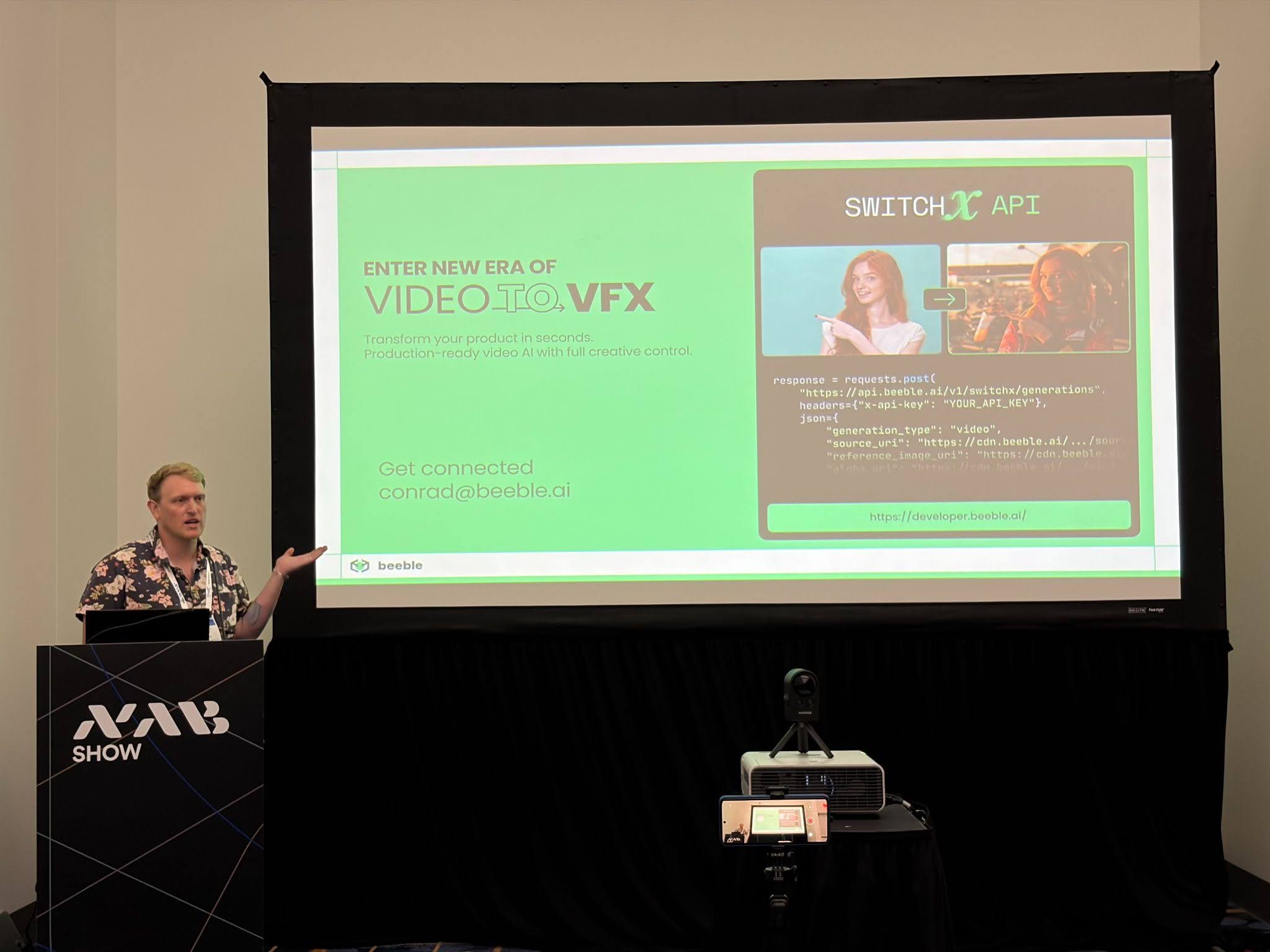
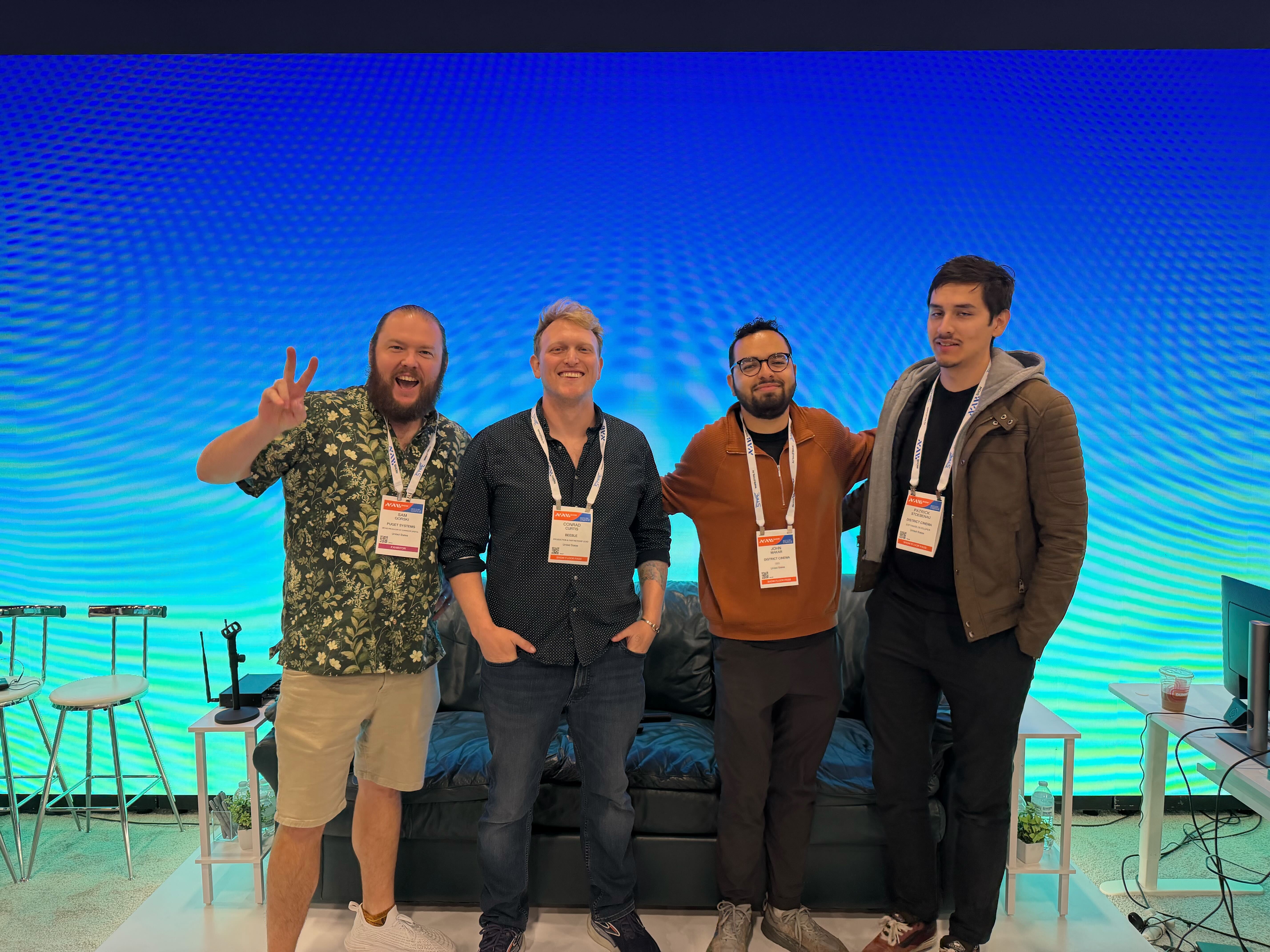
If the hotel suite demonstrated what a portable studio looks like and the XGRIDS session explored how spatial workflows extend its capabilities, the presentation with Puget Systems, District Cinema, and the Corridor Crew grounded everything in the realities of day-to-day production. Running these workflows on compact, high-performance systems made it clear that portability goes beyond physical footprint, ensuring that the full creative pipeline remains accessible wherever you are working.
The introduction of our new Beeble Plugin for Unreal Engine — which we developed in collaboration with the Corridor Crew and District Cinema — and the integration of Corridor Crew's CorridorKey capped off our growing stack of Beeble tools. By addressing the long-standing challenges of green-screen extraction, particularly in fine detail, motion blur, and color accuracy, it complements the broader Beeble approach of preserving as much information as possible for downstream decisions. When combined with SwitchX and Unreal Engine, the result is a pipeline where capture, keying, relighting, and final pixel output are tightly interconnected rather than fragmented across tools and stages.
Where it goes from here
What NAB ultimately reinforced is that this shift toward hybrid, generative production is not a distant possibility but an active transition already reshaping how work gets done. The ability to move between locations without losing capability, to defer creative decisions without sacrificing quality, and to maintain consistency through spatially aware workflows is changing how films are made and how teams think about the process.
If you saw the demos, visited the suite, or caught the sessions, we would love to hear how these ideas resonate with your own pipeline and where you see the opportunities or friction points. And if you missed it, this is the perfect moment to reconnect, because everything we explored at NAB is continuing to evolve, and the next phase will be shaped as much by collaboration as by technology.
Join the next phase of production.