VFX artist Suryam Singh on creating realistic fire with Beeble
"Many AI tools don't give you control. Beeble stands out because I can adjust placement, intensity, and hue with precision."
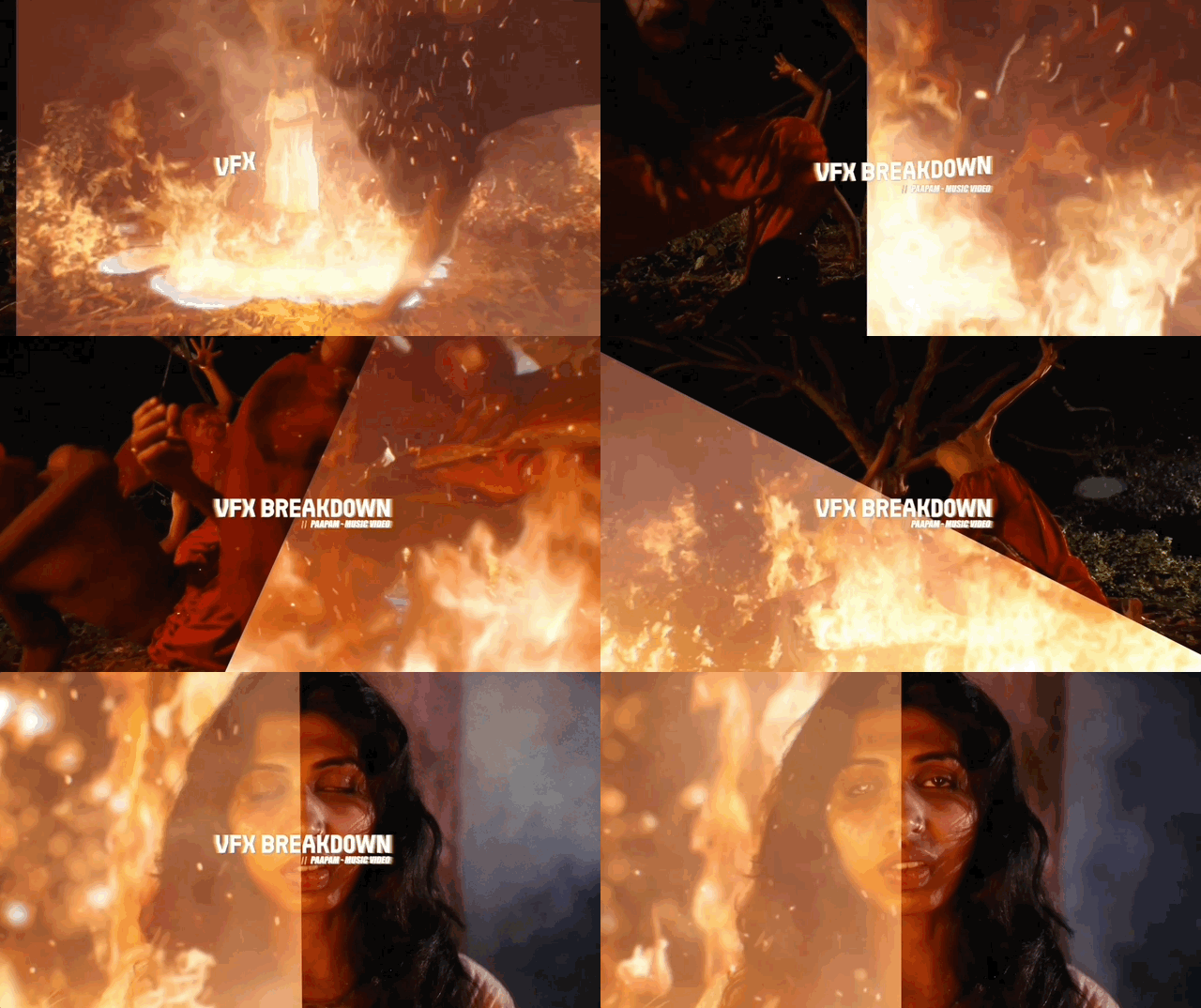
How CG lighting to bring fire-filled drama to Aksomaniac's music video.
VFX artist Suryam Singh has built a career through self-teaching, starting out by editing memes and progressing to high-profile music videos and commercials for clients such as Hyundai, Microsoft, and Google. Today, his expertise spans motion graphics through to advanced post-production, where CG lighting plays a central role in his work.
For musician Aksomaniac's latest single, Paapam, Singh was tasked with delivering a dramatic, fire-filled finale that mirrored the track's themes of shame and release. With only nine days to final delivery, he combined traditional compositing with AI-driven CG lighting to create cinematic realism under intense deadlines.
How It All Started
How did you get involved with Paapam?
A friend of mine introduced me to the Director, Madhavan Krishneswaran. The brief was clear: the final scenes needed to show large-scale fires and flames, with enough drama and visual weight to support the song's emotional payoff. Creating realism required up to 50 layers of fire, ember, and smoke elements, carefully composited to achieve the sense of an environment consumed by flames.
Can you break down the shot shown on your Instagram account?
The base compositing was done in After Effects. I pulled together fire, ember, and smoke assets, layering them to build depth and drama. The goal was to make the fire feel like part of the environment rather than an effect added on top. Once the composites were in place, I turned to Beeble to refine the CG lighting and integrate the flames with the rest of the scene.
Bringing Fire to Life with Beeble
How did Beeble help make the fire effects more realistic?
Matching the atmosphere to the fire additions was essential. Beeble's depth map output gave me the precision I needed to relight each shot. I extracted highlights and applied them back onto the footage so the flames interacted naturally with the characters and environment. I also added fog and haze to reflect the impact of smoke in the scene. These details are what make the fire feel convincing rather than stylised.
What drew you to explore AI tools like Beeble in this workflow?
As VFX artists, it's our responsibility to stay at the cutting edge of technology. AI is becoming part of our workflows, but many tools still rely on broad text-based prompts that don't give you much control. Beeble stood out because it lets me adjust placement, intensity, and hue with precision. That kind of control is critical when you're working with something as dynamic as fire.
Will you be using it in future projects?
Definitely. Blender is already central to my workflow, and experimenting with the Beeble add-on is high on my list. The creative freedom it gives me in lighting has already proven valuable, and I expect it will become a bigger part of how I approach upcoming projects. There's something else I want to try it for: photogrammetry. I should be able to take a 3D scan of an object, remove all light and shadow in Beeble, and use it in various projects without the multi-camera setup.
The Future of VFX
What are your predictions on emerging technology in VFX?
Real-time applications will become the standard across the industry, and virtual production will transition from a niche to a mainstream practice. AI is here to stay, too, but for it to succeed, the tools must remain customisable and accessible. At the end of the day, artists need to keep creative control; the technology should enable, not dictate.