The Month Between April and May: A human-made animation pipeline
"We're not asking AI to make the artwork. It's always going to be 100% human made."
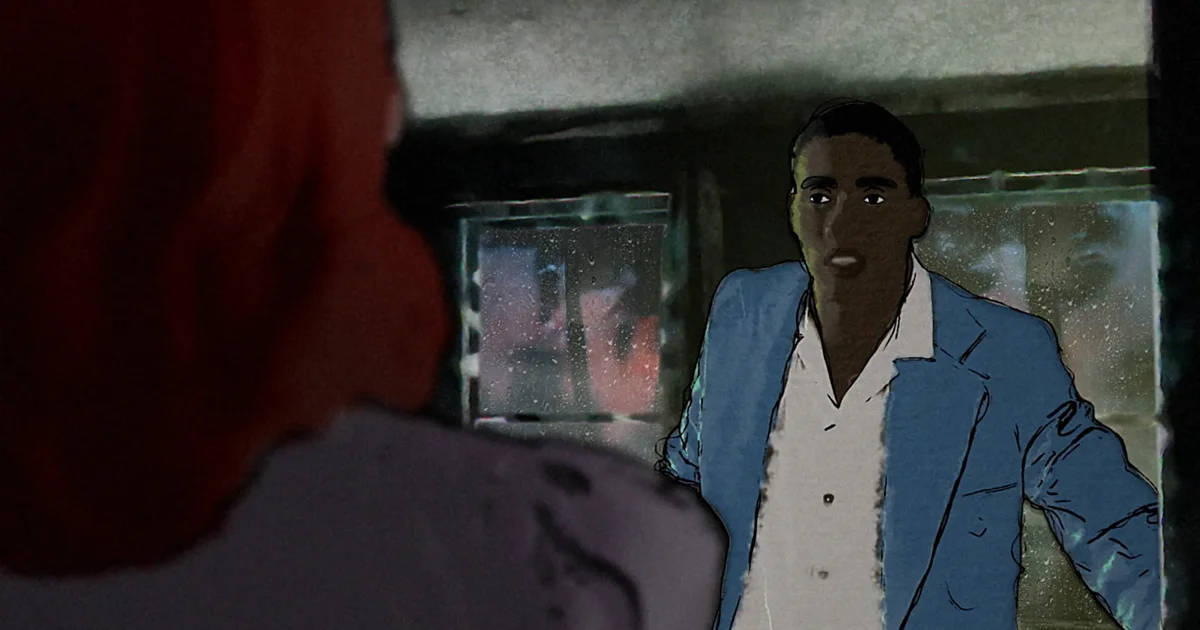
How 2000blue's Kai Tattersall built a hybrid live-action and rotoscope pipeline for The Month Between April and May, using Beeble for PBR extraction while keeping the artwork 100% human-made.
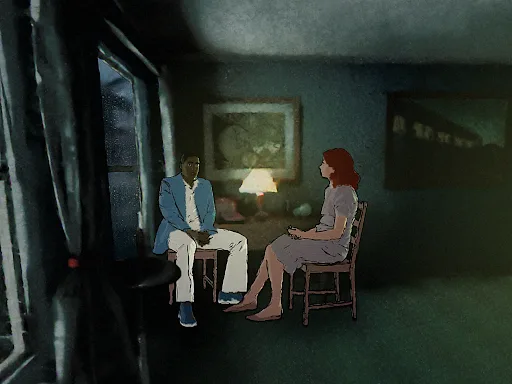
For The Month Between April and May, director and visual artist Kai Tattersall is building a film that moves between live action, painted animation and immersive installation.
Created with composer Myles Ortiz-Green for Qualcomm Institute's Recombient Lab, the project combines wraparound projection and 32-channel spatial sound, but its experimentation extends beyond the exhibition format. Behind the film is a hybrid production process Kai has been refining for years, one that combines performance, rotoscope animation, and technical tools to deliver a fully human-made result.
We spoke with Kai about building that pipeline, why Beeble became part of it, and where he draws the line between assistance and authorship.
How did The Month Between April and May begin?
Myles and I had been talking for a long time about making something shaped by the way we listen to music — especially ambient music, where slowness and duration become part of the emotional experience. We wanted to make a film that moved like that, where things could unfold without urgency.
A lot of that also came out of conversations about where we come from. I'm from Okinawa, and his lineage is from Puerto Rico, and we had very different relationships to island identity, memory and return. There was a tension there that felt worth building a film around. That became the emotional core.
The immersive installation really grew out of the film rather than the other way around. Adapting it for Qualcomm's Recombient Lab let us expand that atmosphere through 32-channel sound and wraparound projection, but I still think of the project as fundamentally filmic. The sound leads a lot of it, which I think is unusual, but that's because Myles has been creatively involved from the very beginning.
Watch the director sample reel (MP4, ~159 MB)
Your work sits somewhere between filmmaking and animation. What draws you to that space?
I came out of film, but I was constantly drifting toward animation, and over time I stopped thinking of them as separate disciplines.
What interests me is that this process lets me tell stories that would be impossible for me to make through traditional means. If this project were fully live action, the budget would be enormous. If it were fully animated, it would be years of labour. This method sits in a kind of middle space where scale becomes possible.
I sometimes describe it as rotoscoping with a lot of cheating, and I mean that affectionately. It's about creative shortcuts — finding ways to move faster without giving up authorship. I can control what I need to preserve the language of the film, like the performance, the look, the production design, while letting animation expand what the world can become.
You describe the project as 100% human-made. Why is that distinction important?
Because I think where you draw the line matters, and you have to be able to defend where you draw it.
I've been experimenting with AI tools for years, so I'm not speaking from a place of outright rejection of technology. But I didn't want those systems making creative decisions for me. If AI is generating line work, inventing colour, designing environments, for me, that moves away from a human-made product.
What we're doing here feels very different. We're using AI for extraction, not authorship. We're asking for material information — normal maps, albedo maps, matte extraction — things that help us understand the footage, not create the final image.
That distinction is really important to me. The drawing, the painting, the lighting decisions, the visual style, those are still ours. The tool helps us get to the work, but it isn't making the work.
Where does Beeble fit into your pipeline?
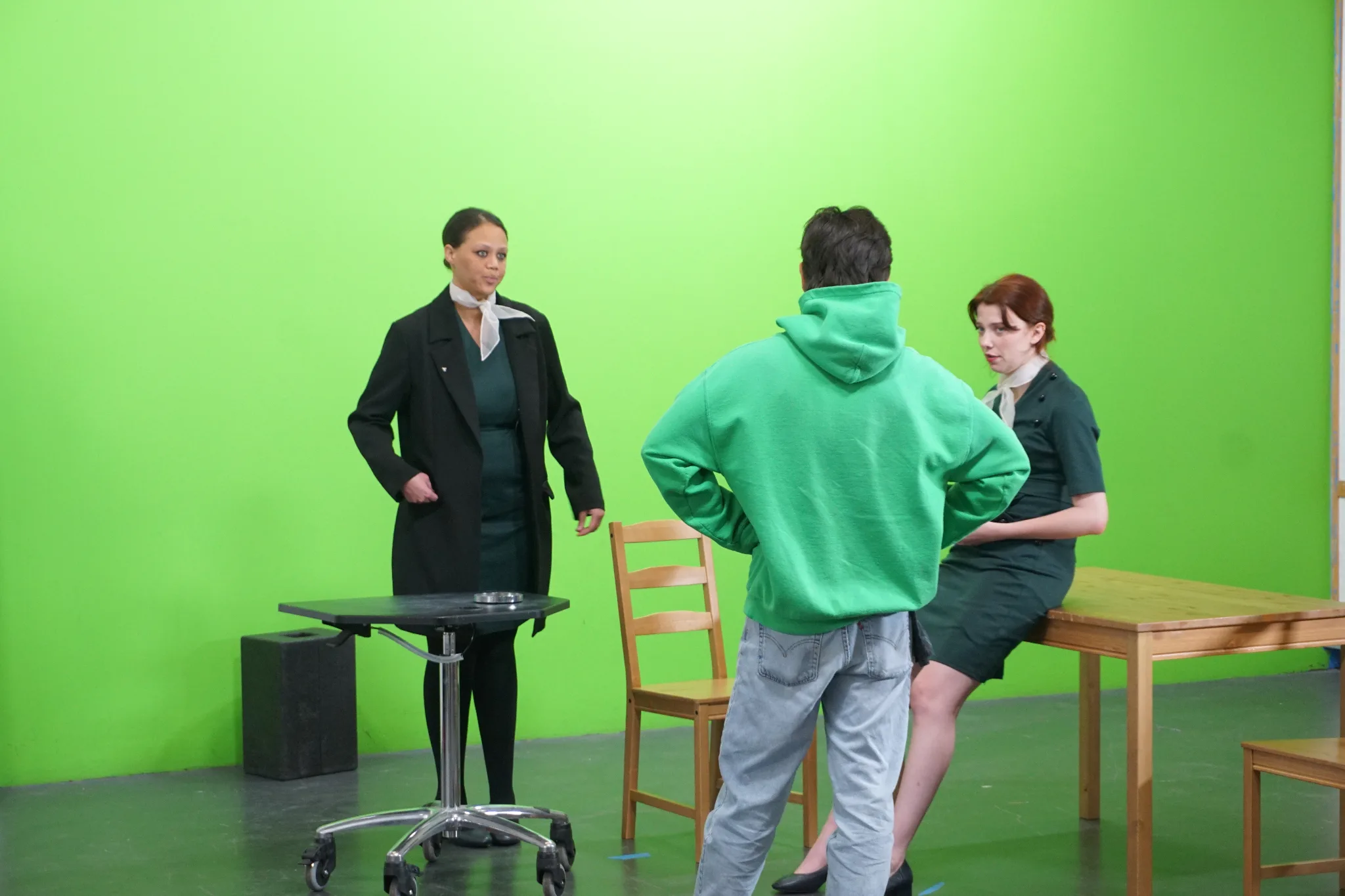
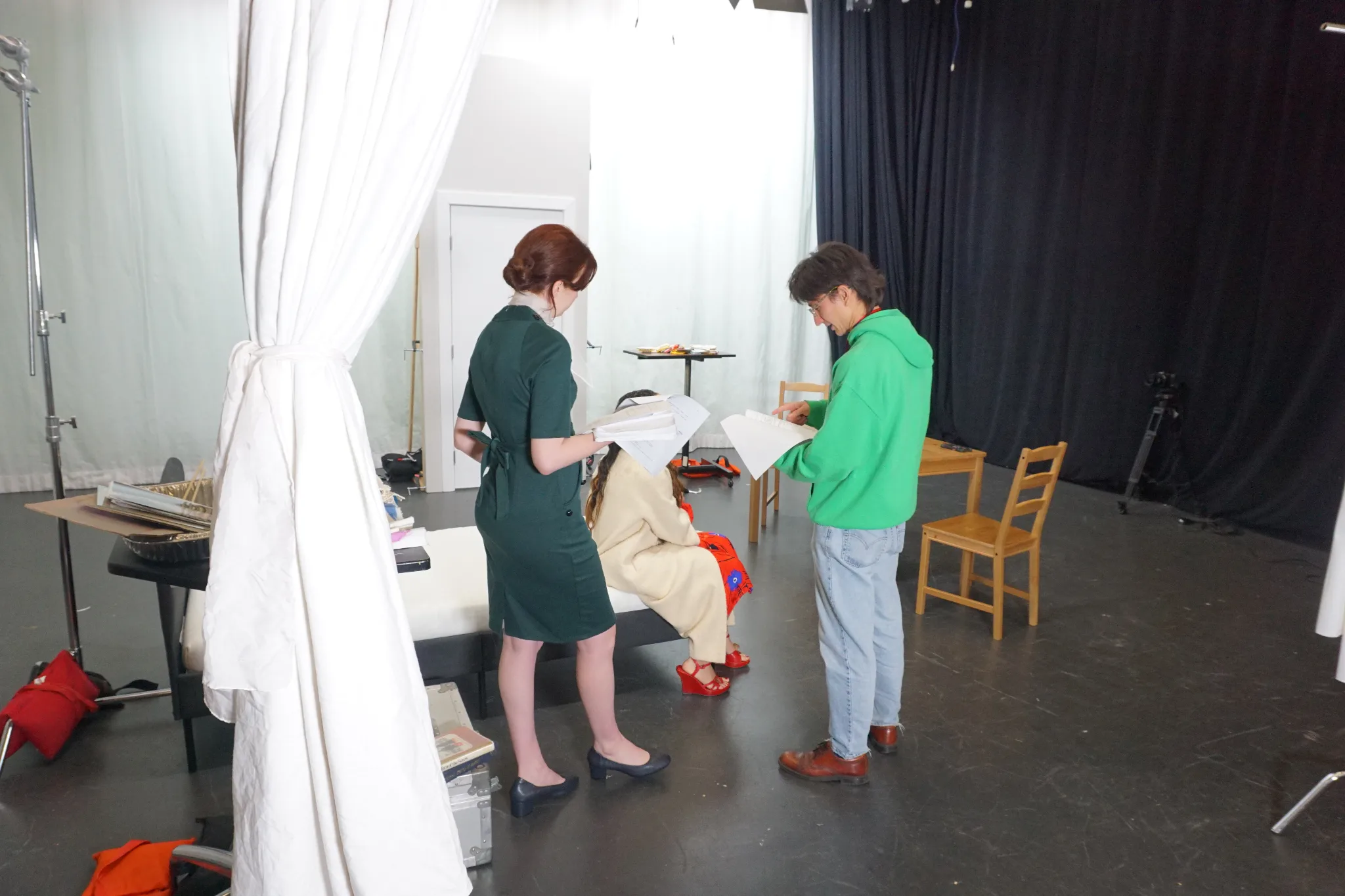
It enters almost immediately after production. We shoot on a soundstage, often with multiple cameras, almost more like theatre than traditional filmmaking, and then that footage comes into the animation pipeline.
Beeble is especially important at the PBR extraction stage. The albedo maps have been hugely useful for us, particularly because they remove green spill from the source footage in a way traditional tools never really solved well enough. That alone is a big part of why it became part of our process.
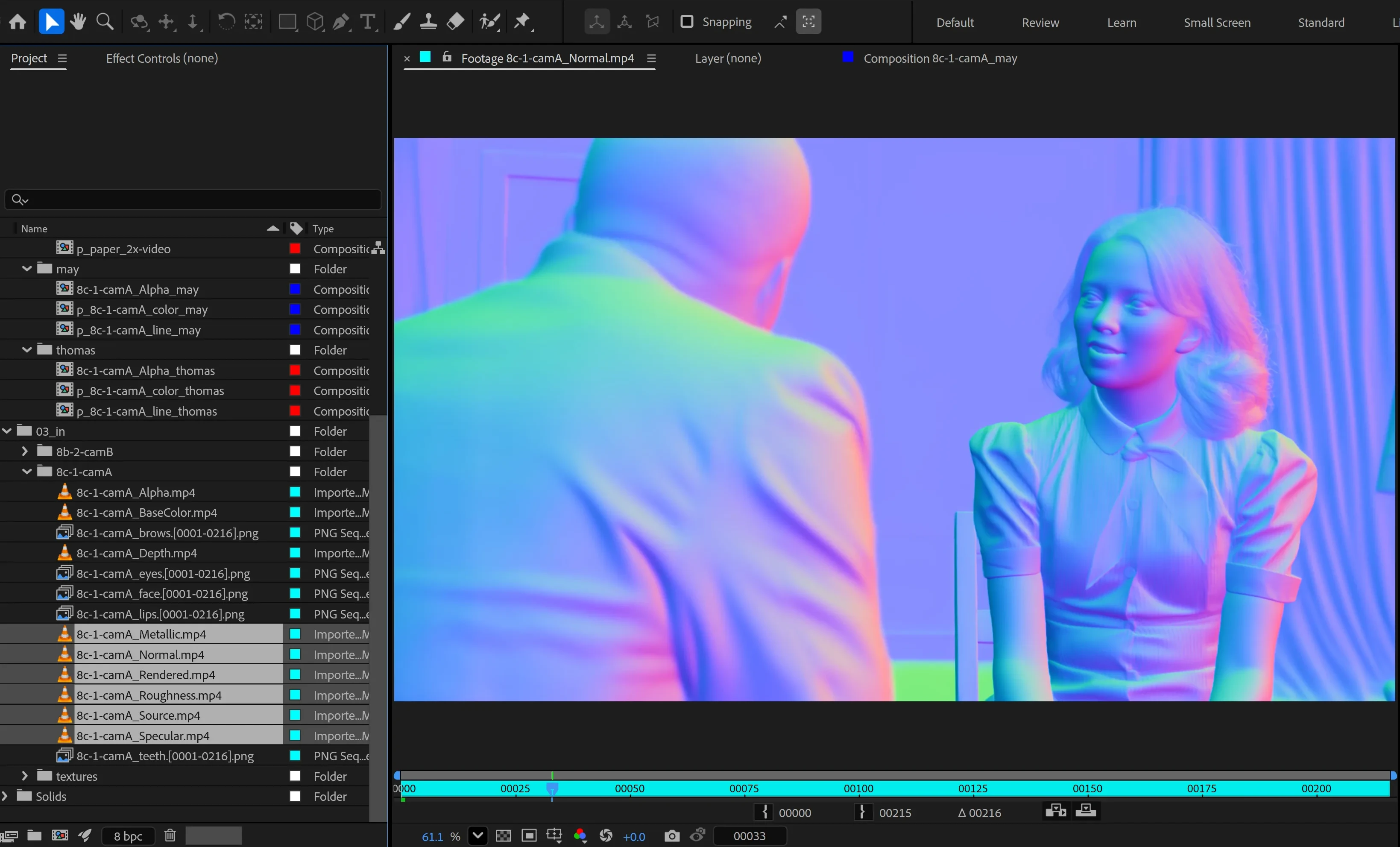
The normal maps are equally important, but for a different reason. They give us lighting reference, and in our workflow, that becomes incredibly valuable because it helps guide line work and painted lighting decisions later. It's not an exaggeration to say I don't think we could do this process the same way without those passes.
Can you talk more about how you use the normal maps?
I tend to think of them as guide lighting. That's really what they are for me.
If I were painting shadows and highlights frame by frame entirely from imagination, the labour involved would be enormous. That's what whole careers in traditional animation are built around. I simply don't have the resources for that.
But with the normal maps, I have something truthful underneath to react to. I can see how light moves across a face or body frame to frame, and then I paint over that. I'm still making the decisions, but I'm doing so much faster and with much more confidence.
That's what makes it so useful. It doesn't replace artistic judgement — it accelerates it.
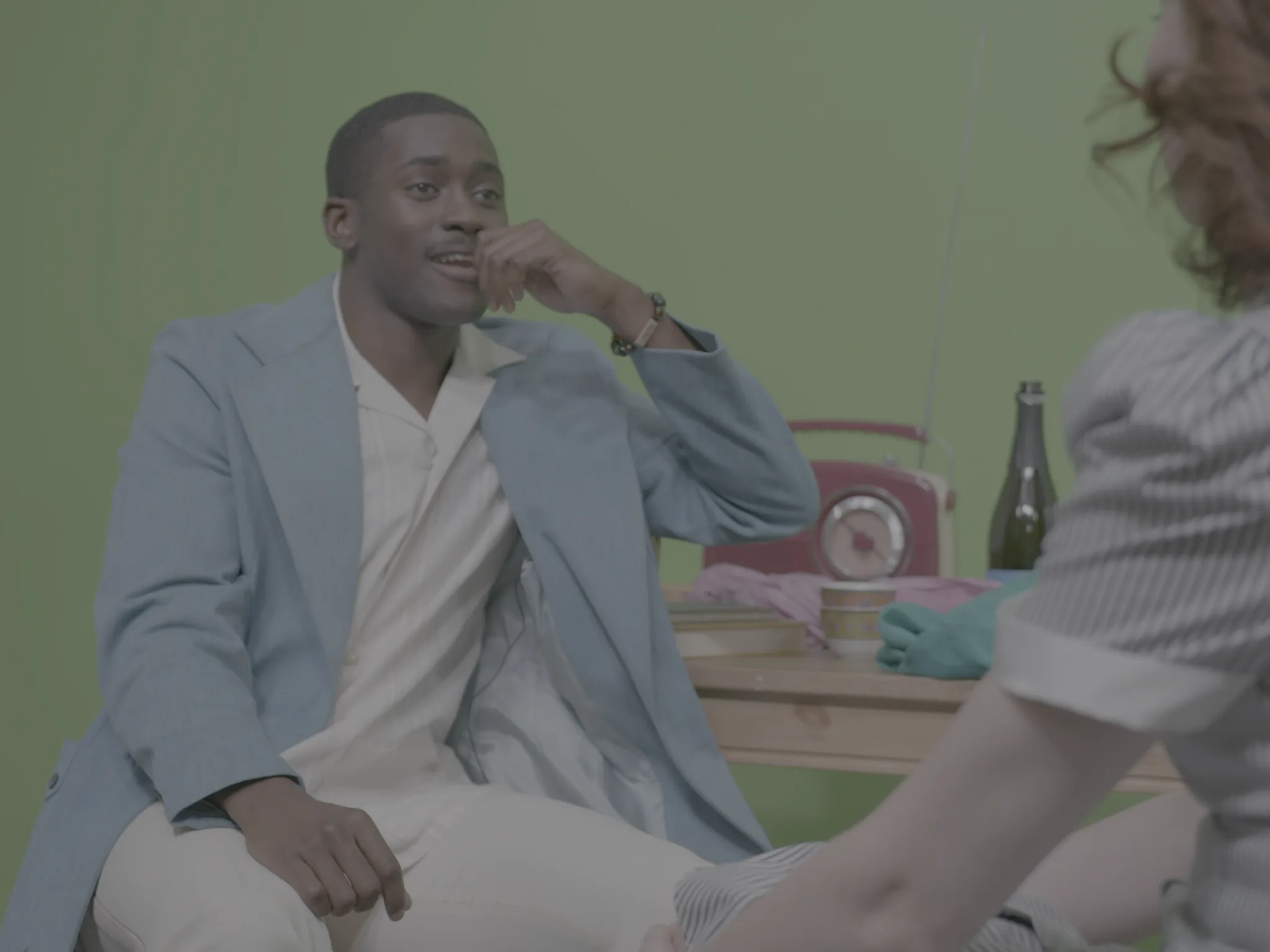 Source footage
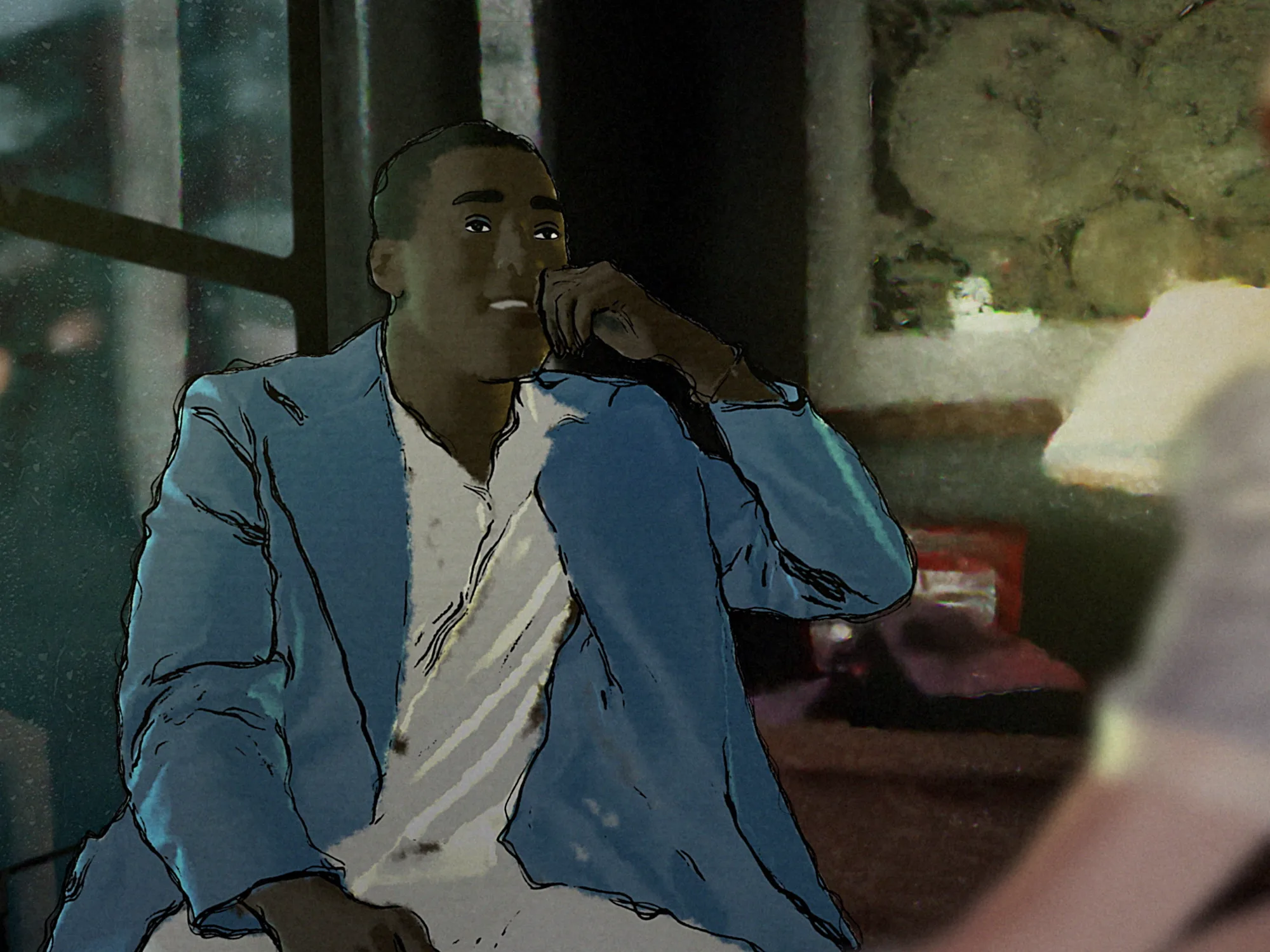 Final rotoscope
Did it affect how you approached production on set?
Completely. It changed the shooting methodology.
Because we knew lighting decisions could be developed later, we shot with flat lighting on set, which gave us enormous flexibility. It meant faster scene changes, multi-camera setups, and fewer resets.
We were shooting eleven pages of script a day, which is kind of absurd. But a lot of that was possible because we weren't treating lighting as something that had to be fully resolved before the camera was set.
That really changed what scale of production felt possible for a small team.
Was there a moment when it made a noticeable creative difference?
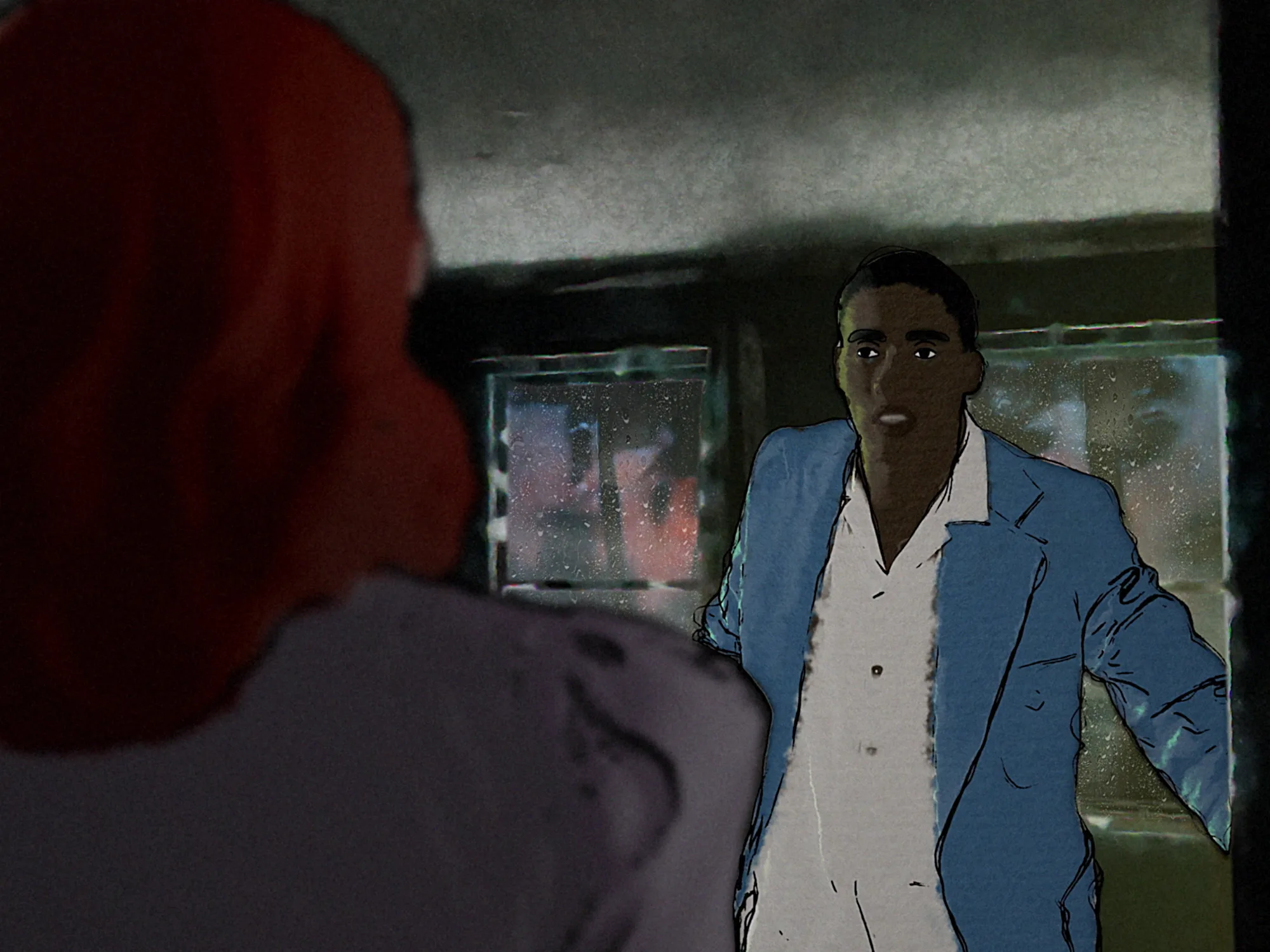
There's a scene with Thomas sitting by a window that comes to mind. It was a deceptively difficult shot because he's moving constantly, and the lighting is shifting in subtle ways.
What Beeble made easier was experimentation. I could audition lighting ideas quickly, move a source, change an edge light, alter colour relationships, and understand those decisions visually before committing.
That mattered less as a time saver and more as a creative tool. It made exploration easier.
And honestly, that's maybe the part I find most exciting.
Do you see this becoming your standard workflow?
Yes, completely.
I think this is the pipeline now, and what excites me about that isn't just efficiency. It suggests another way filmmaking might work: smaller teams, people wearing more hats, more creative ownership.
I always compare it to music production. There was a time when making a record required enormous infrastructure, and now extraordinary work can be made much more independently.
I'd love to see filmmaking continue moving in that direction.
Do you see this as part of a broader shift in animation or filmmaking?
Maybe. I try not to make huge predictions.
But I can imagine more people becoming interested in treating relighting in post as a serious creative stage rather than just corrective work. And I do think for rotoscope-based work, especially, we're only beginning to understand what tools like this can support.
You can support the film here.
Credits
Kai Tattersall — Director / Writer / Animator
Myles Ortiz-Green — Composer / Producer
Swati Shetty — Executive Producer
Mike Patterson — Creative Advisor