Preparing the next generation of filmmakers: Inside ETC
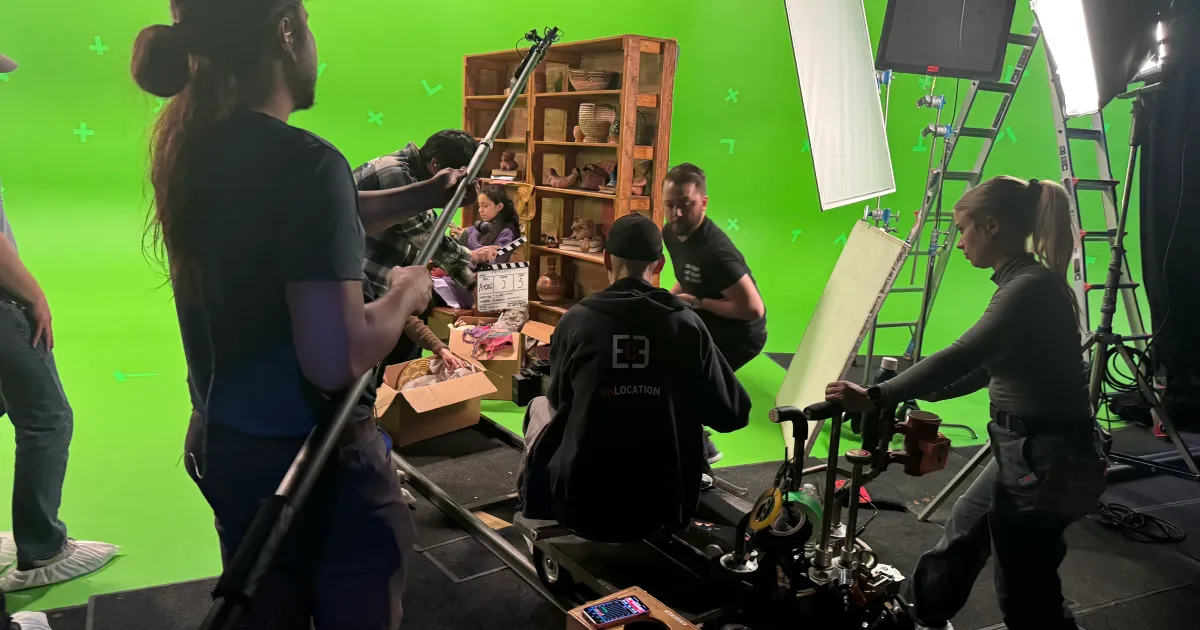
Technology has always shaped the way movies are made. From photochemical film to digital cinematography, virtual production, and now artificial intelligence, every generation of filmmakers has adapted to new tools while building on the same foundations of storytelling and cinematic language.
For the Entertainment Technology Center (ETC) at the University of Southern California's School of Cinematic Arts, exploring the practical applications of future technologies is central to its mission. Working alongside studios, industry partners, and educators, ETC evaluates how emerging production tools integrate into real-world filmmaking workflows while helping prepare the next generation of storytellers for an industry in constant evolution.
Beeble has been incorporated into several ETC education and research initiatives. We spoke with Erik Weaver, Principal of AI & Emergent Media, and Tom Thudiyanplackal, EP, Producer and Industry Mentor, about why experimentation matters, how filmmaking education is changing, and why storytelling remains the constant.
How does ETC evaluate emerging technologies?
Erik Weaver: Every major technological shift changes the tools filmmakers use, but our role remains the same. At ETC, we explore the practical applications of future technologies through studio-grade productions and educational programs, helping the industry understand what works today while preparing filmmakers for what's next.
Beeble became part of that exploration because it gives students and researchers a practical way to experiment with AI production workflows while allowing us to evaluate how those workflows fit into professional filmmaking.
You've said AI is changing the language of production itself. What do you mean by that?
Tom Thudiyanplackal: Throughout cinema history, production methods have evolved around the limitations of technology. Film had one set of limitations, digital another. AI introduces something fundamentally different.
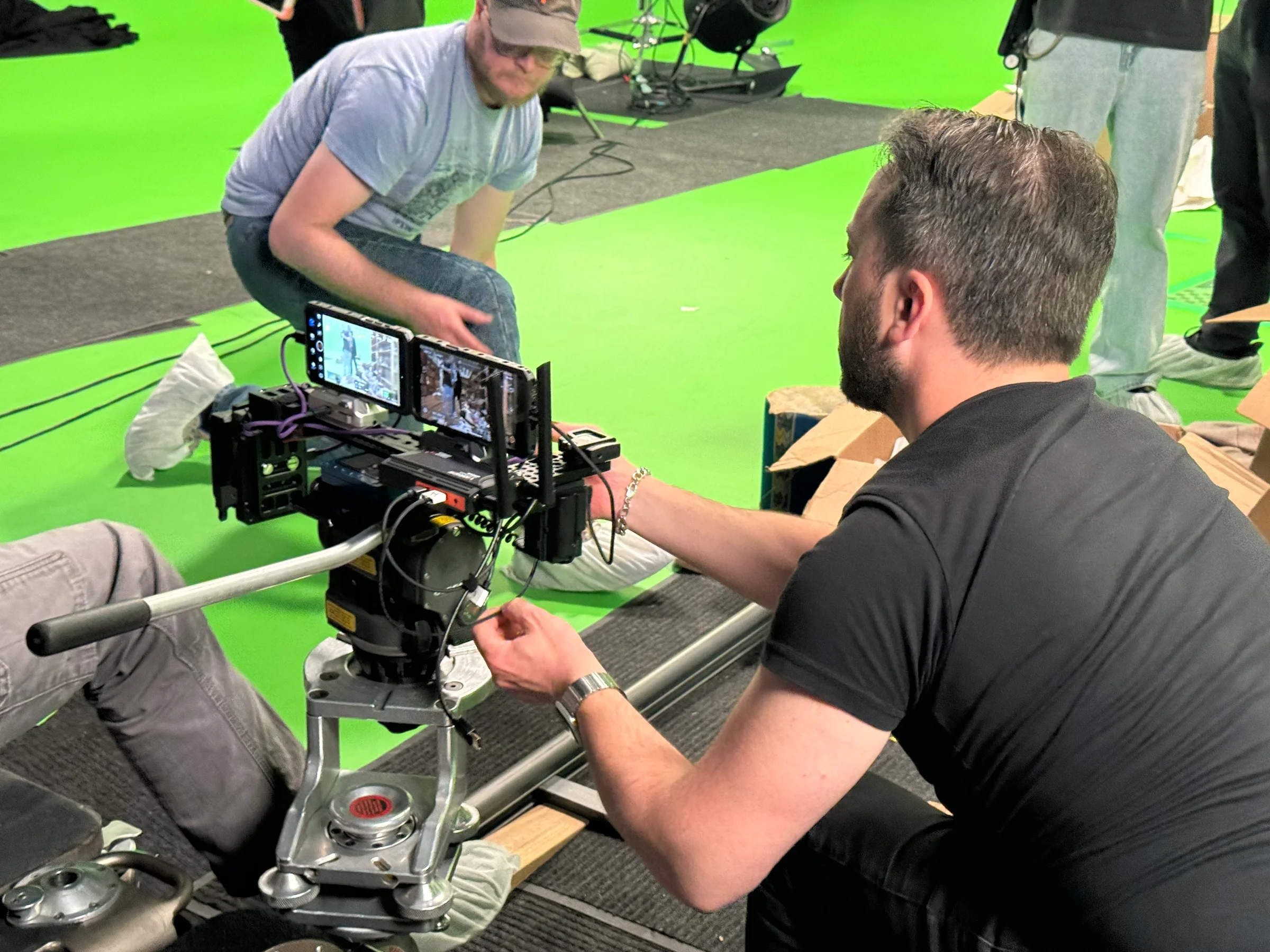
Instead of simply capturing a fixed number of takes, filmmakers are increasingly capturing data that gives them the freedom to iterate throughout production and post-production. That changes how we think about production itself.
At the same time, different technologies are becoming specialised for different tasks. Cameras remain essential for capturing performances, but there are now better tools for world-building, environment capture, actor likeness, and other production elements. The challenge becomes understanding how all those tools work together to create the final image.
How is this changing filmmaking education?
Tom: Visual effects at this scale would traditionally have been inaccessible to students. We've seen students arrive with ambitious ideas that might once have been considered unrealistic for a class project, but today's tools are allowing them to pursue those creative visions.
We've already seen students develop projects that previously would have been considered unrealistic for a class. Instead of rewriting ideas to match production limitations, they're able to explore more ambitious creative concepts while learning how professional workflows operate.
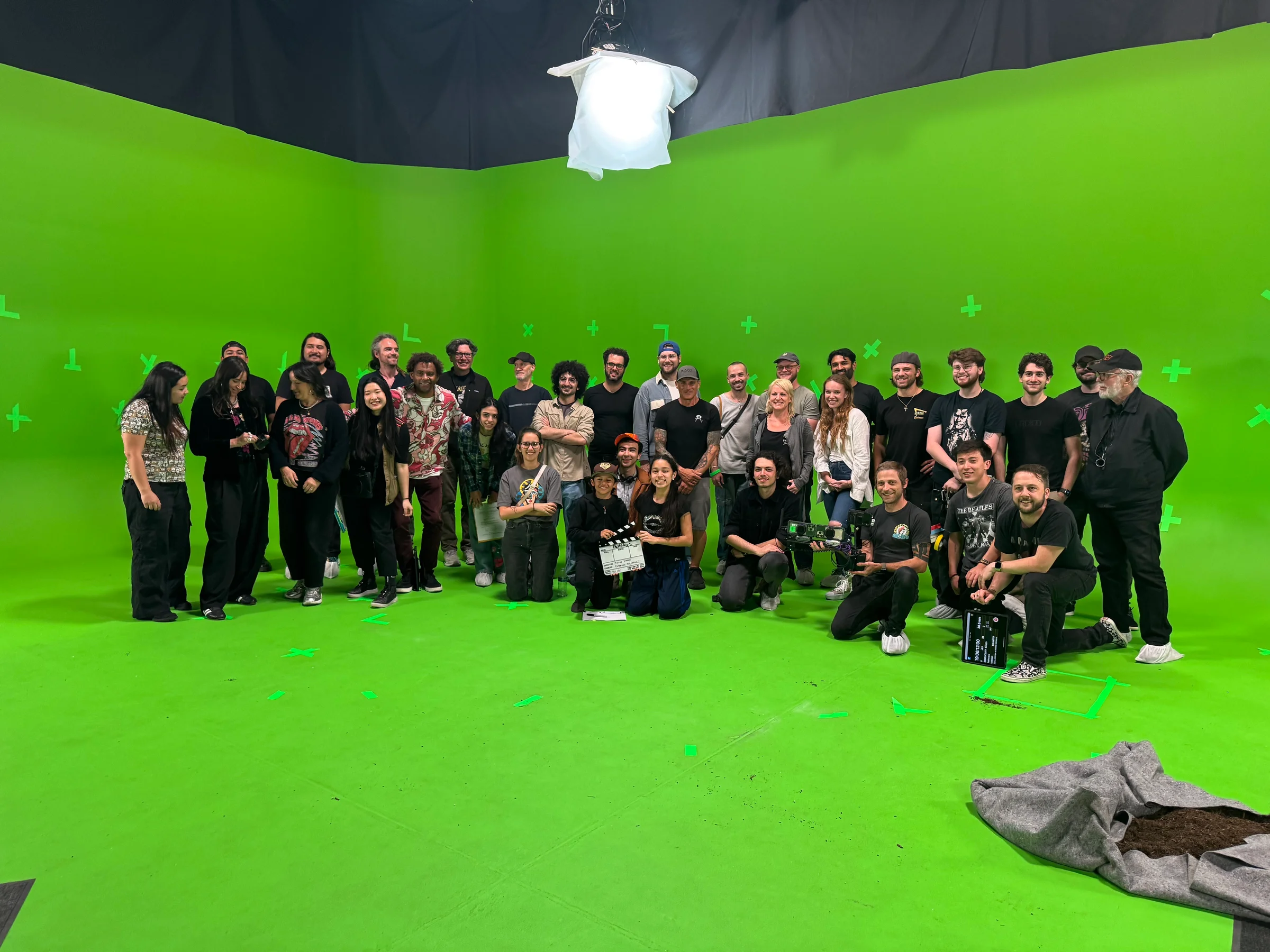
Erik: One of our students questioned why they had even gone to film school after enrolling in an AI filmmaking class. At the end of the course they came back energised. They realised that without understanding storytelling, visual language, and filmmaking fundamentals, the AI tools weren't enough.
Technology can accelerate production, but it doesn't replace the craft of filmmaking. Understanding composition, pacing, performance, and emotion remains just as important as ever.
How are the studios you work with approaching AI?
Tom: The conversation has shifted from whether AI is used to how it's managed responsibly.
Studios care deeply about provenance, ownership, and understanding exactly how AI fits into a production pipeline. They want to know where assets come from, how they're generated, and how intellectual property is protected.
That's why we're interested in production-ready workflows rather than isolated demonstrations. The goal is to understand how these tools integrate into real filmmaking.
How does that research extend beyond the classroom?
Tom: One example is Pathways, a research filmmaking project that allowed us to work with cinematographer Roberto Schaefer while exploring AI-assisted production workflows.
The project investigated how lighting decisions made during production could better support AI later in the pipeline. Rather than treating AI as something that happens only in post-production, we looked at how cinematography, lighting, and virtual production could all be planned together from the start.
It also became a fascinating case study because the project spanned several generations of Beeble's technology, allowing us to see how quickly the tools evolved while we were still building the workflow.
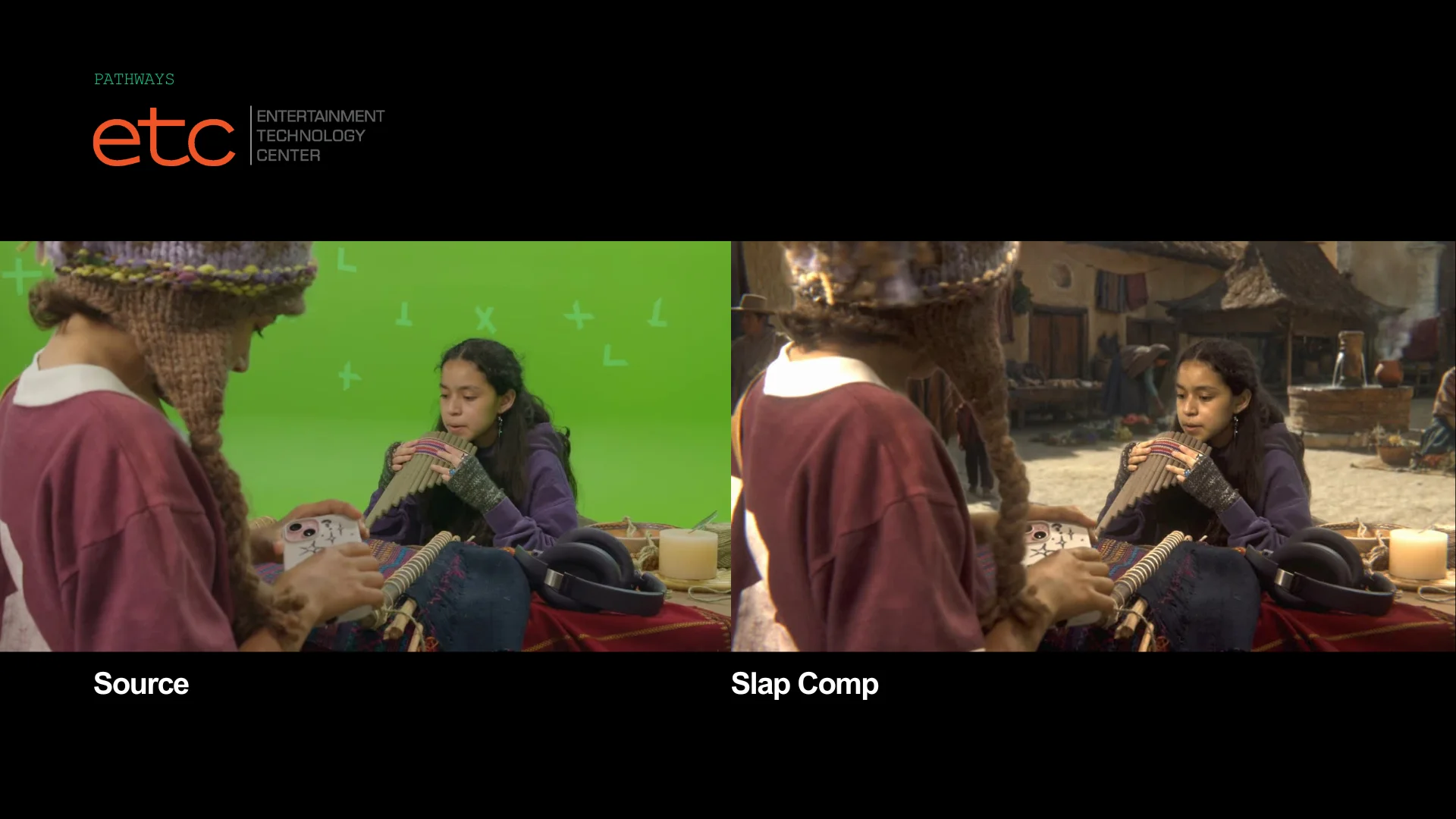 Source composition
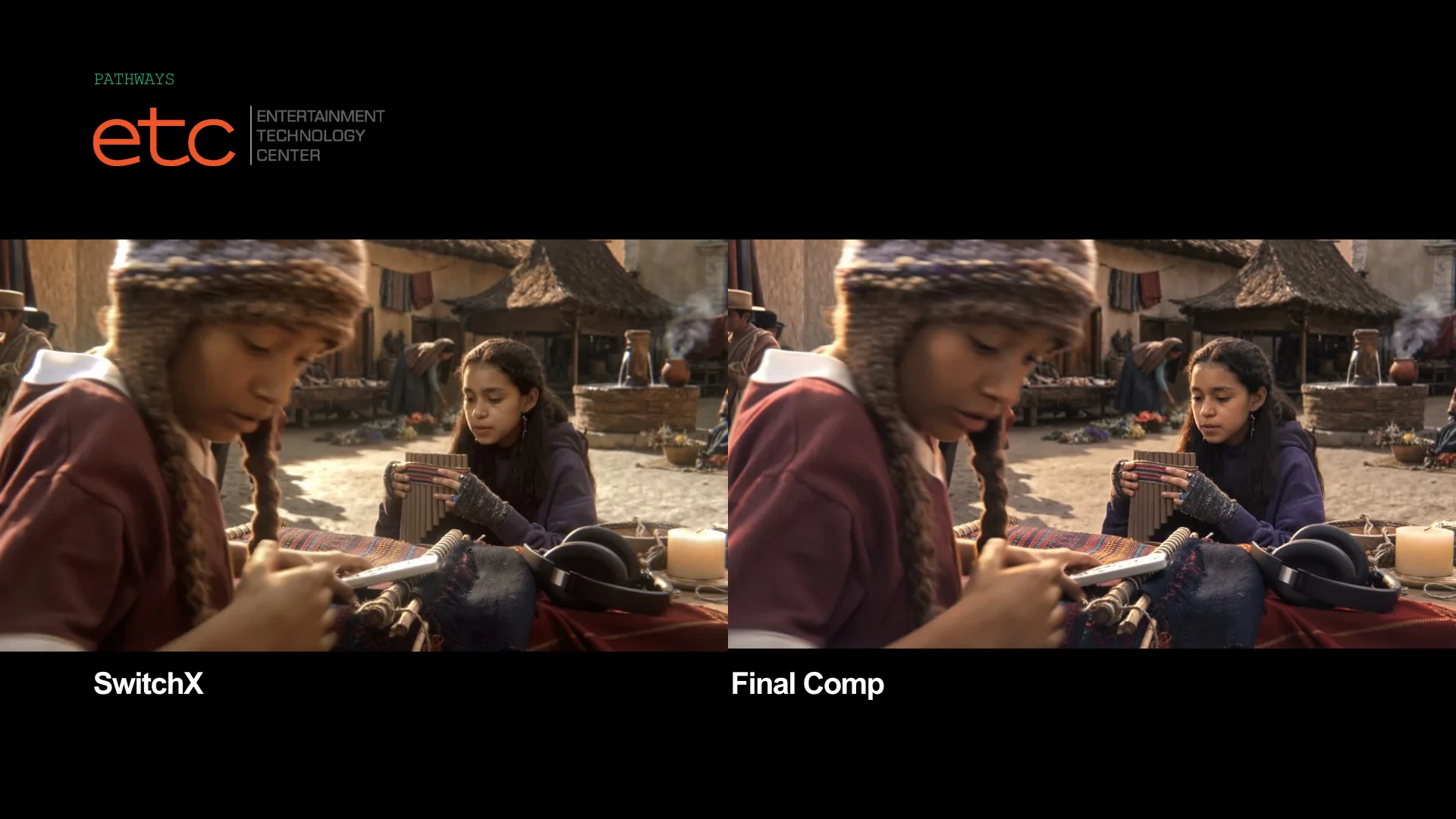 Final SwitchX composition
What advice would you give filmmakers exploring new technologies?
Tom: Stay true to your story, not to your tools. Technology will continue to evolve, sometimes faster than a production schedule. Commit to the workflow you've chosen for a project, but always maintain a separate space for experimentation and research. That's how you'll continue learning without constantly restarting your productions.
Erik: The fundamentals don't change. Storytelling, cinematography, and visual language are still what audiences respond to. AI simply gives filmmakers another way to realise those ideas.
As filmmaking evolves, ETC's work demonstrates the value of evaluating new technologies through practical application rather than theory. By bringing together research, education and production, the institution is helping shape how the next generation of filmmakers will navigate an industry where the tools continue to evolve, but the principles of great storytelling remain unchanged.
Ready to try Beeble?