Controlling the frame: what we learned at SIGGRAPH 2026
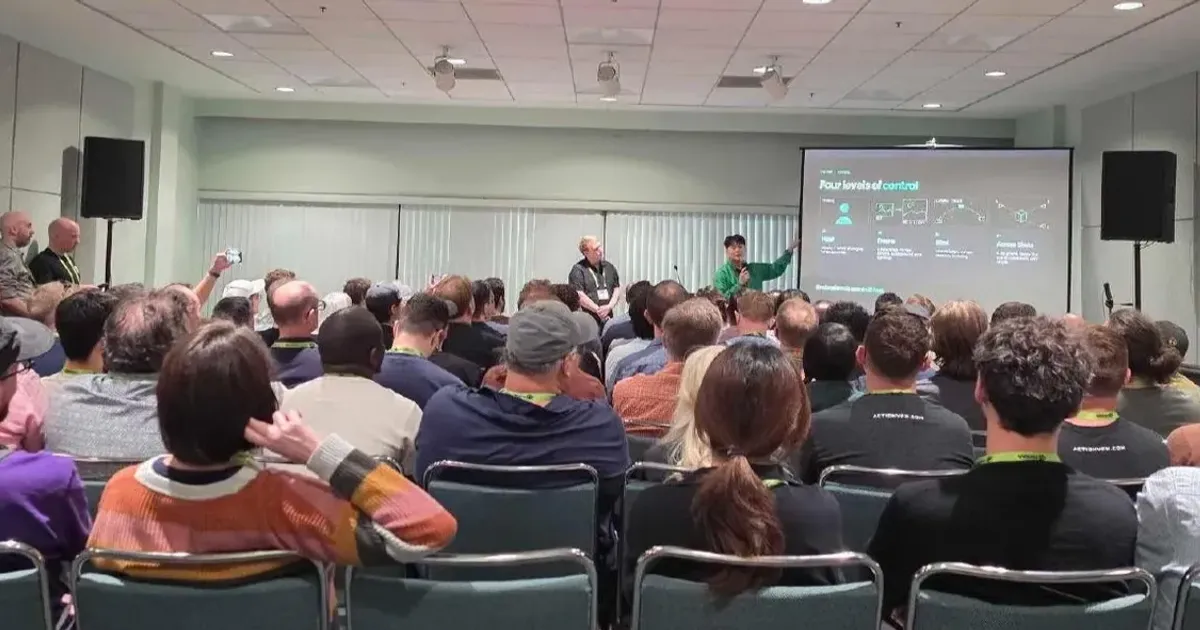
Last week at SIGGRAPH 2026, we were delighted to see a packed room for our Birds of a Feather session, "Controlling the Frame: AI VFX, Generative Video, and the Future of Compositing".
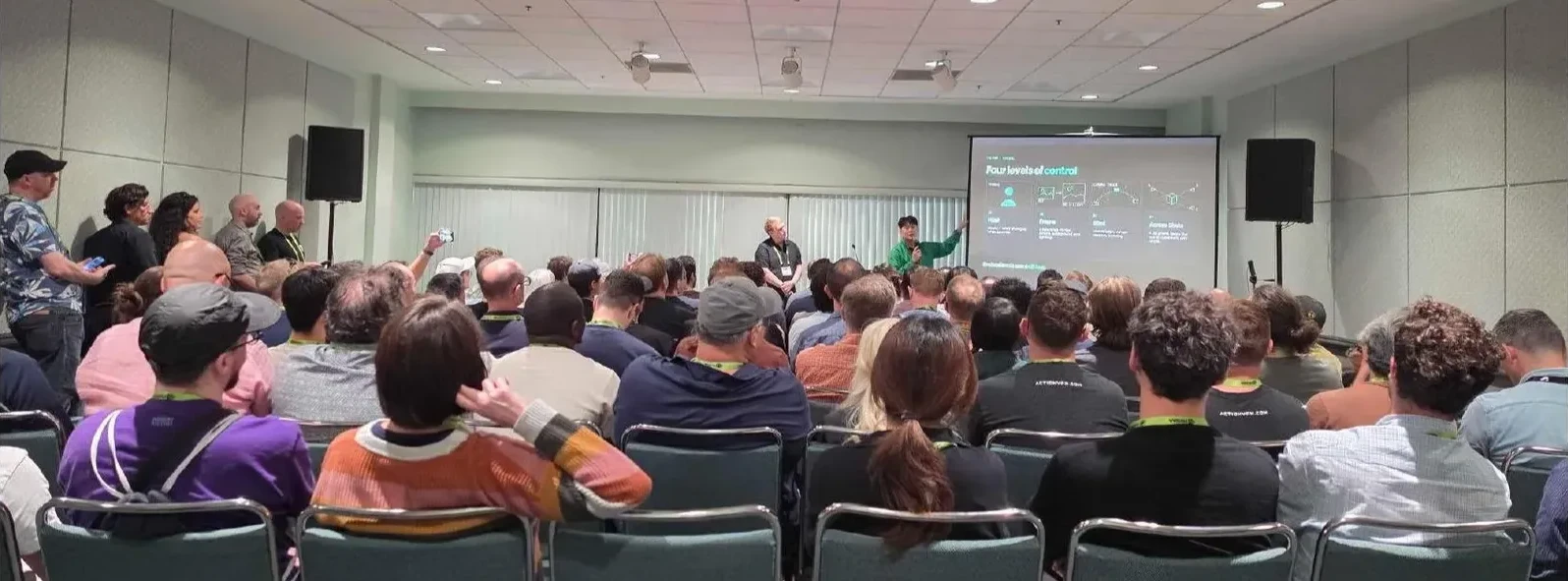
The room was over capacity before we'd even started. People sat along the walls and stood at the back for the full 69 minutes, and when we opened the floor for questions, we had to cut the queue off after 31 minutes with hands still up. It's the best problem a speaker can have, and we're still thinking about the conversations that followed.
What played out in that room wasn't simply a discussion about AI; it was a conversation about something far more important: creative control.
That became the central theme of the session, led by Beeble CEO Hoon Kim and Production and Partnerships Lead Conrad Curtis, bringing together filmmakers, VFX artists, researchers, and developers.
Three years in a hallway
Hoon opened with the origin story: the idea for Beeble started three years ago, in a hallway not far from where we were standing to give the talk. It's a small detail, but it set the tone for the hour that followed — this wasn't a pitch built in a boardroom, it was built by people who'd spent years in production trying to solve their own problem.
AI is changing compositing
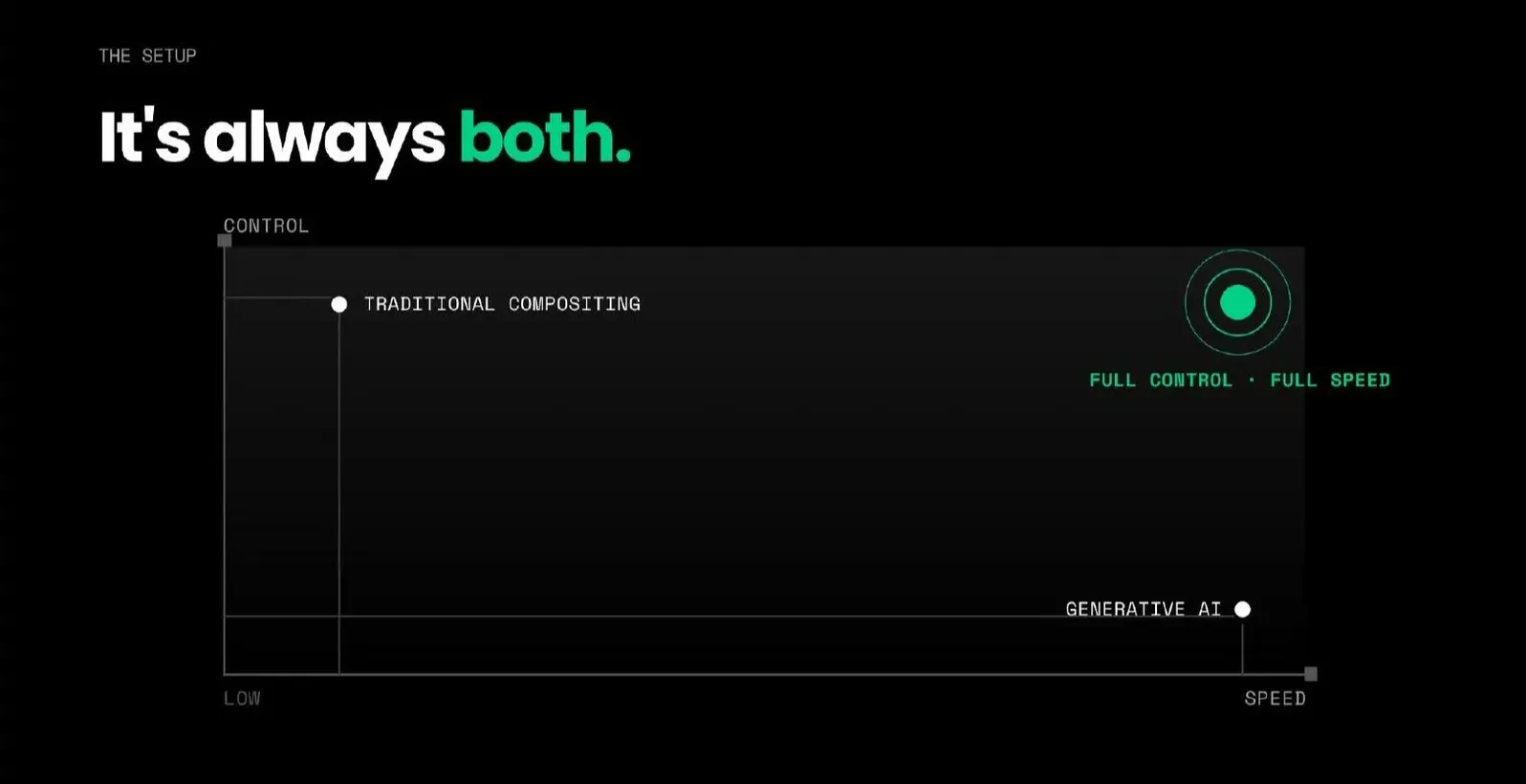
Much of today's conversation around generative AI focuses on speed. But professional productions have never been driven by speed alone. They are driven by repeatability, collaboration, consistency, and the ability to refine creative decisions over hundreds or thousands of shots.
That means AI has to become part of an existing production pipeline. Traditional compositing offers precise control but can be time-intensive. Fully generative systems offer incredible speed but often sacrifice predictability. The opportunity lies in combining the strengths of both approaches.
One slide summarised this simply: It's always both.
Professionals want control
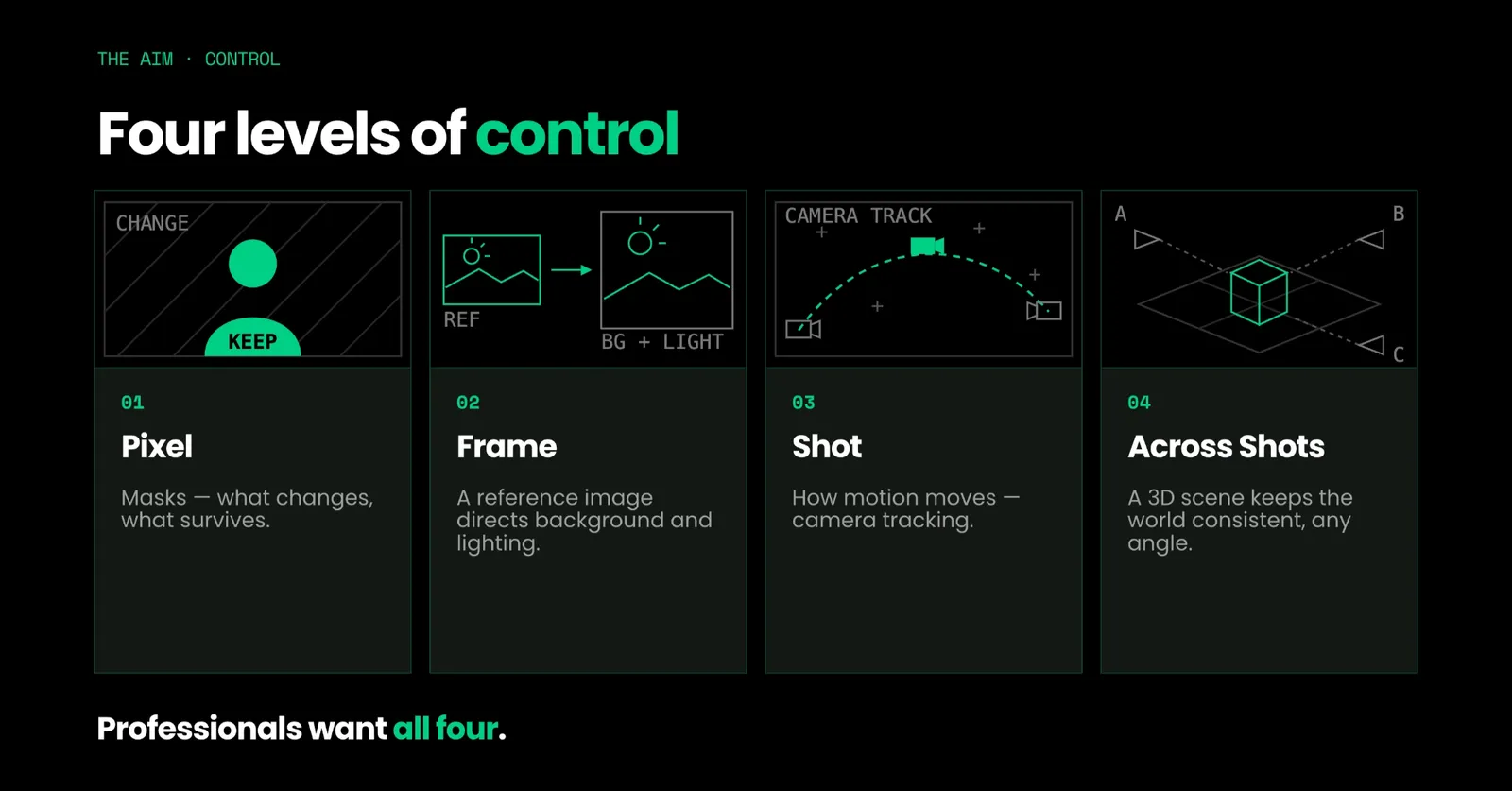
Throughout the session, we introduced what we see as the four levels of creative control that artists increasingly expect from AI systems.
1. Pixel control
Can you decide exactly what changes, and what stays untouched?
Professional artists don't want AI repainting an entire frame every time they make a change. They need reliable subject preservation so performances, costumes, and subtle details remain intact while environments or lighting evolve.
2. Frame control
Can a single reference image direct the look of an entire shot?
Reference imagery should become creative direction, allowing artists to establish mood, production design and lighting without losing the original performance.
3. Shot control
Can the generated world stay coherent as the camera moves?
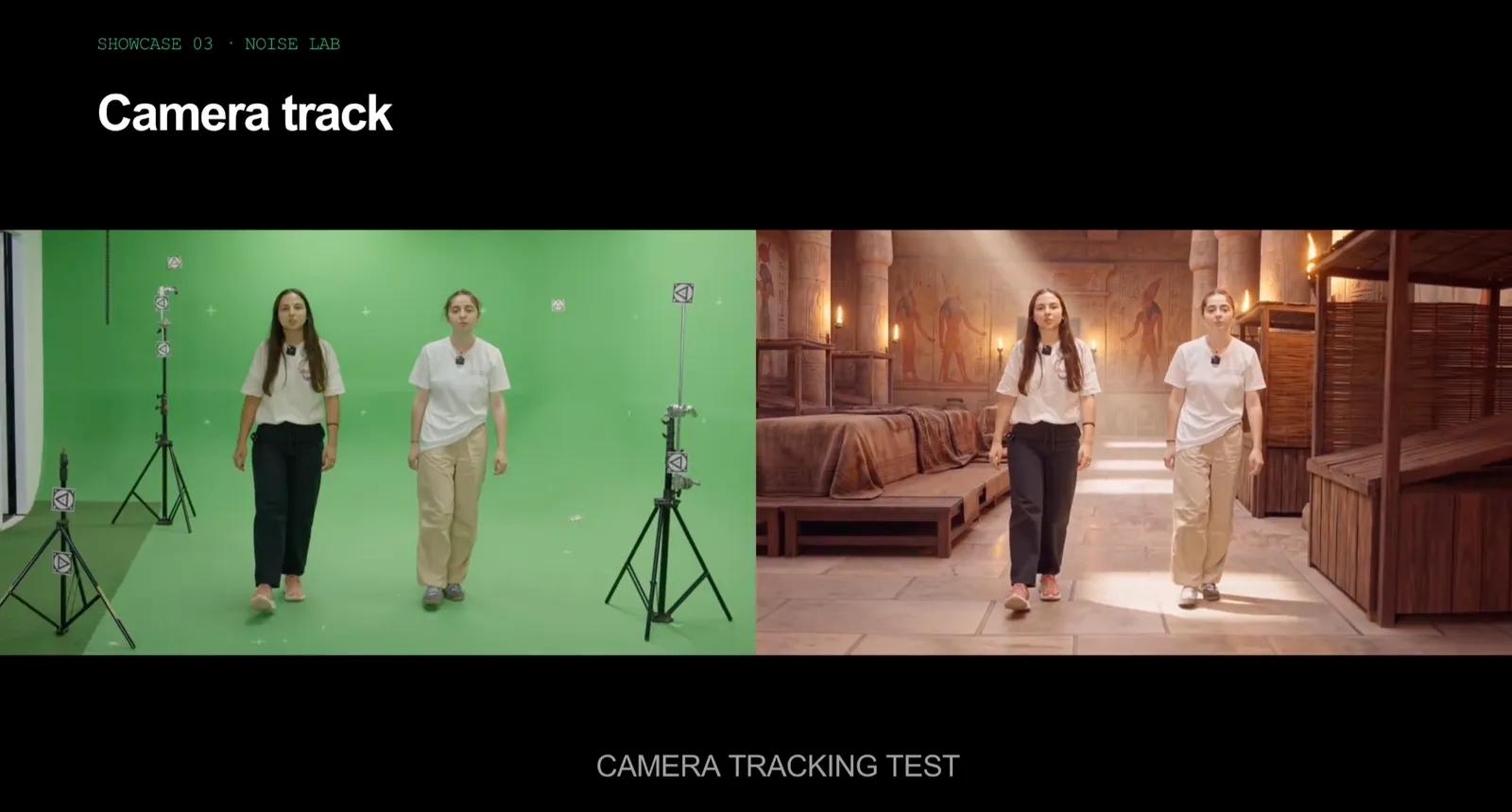
Maintaining consistency through motion remains one of the hardest problems in generative video. Camera tracking, depth understanding, and temporal consistency become essential.
4. Sequence control
Can the world remain consistent across an entire production?
Artists need environments, lighting and production design that remain stable from shot to shot while still allowing creative iteration.
Professionals want all four.
Real productions are already showing what's possible
Rather than focusing on technology demonstrations, the session highlighted four very different productions that illustrate how controllable AI is already entering professional workflows.
Hellbound: preserving the craft
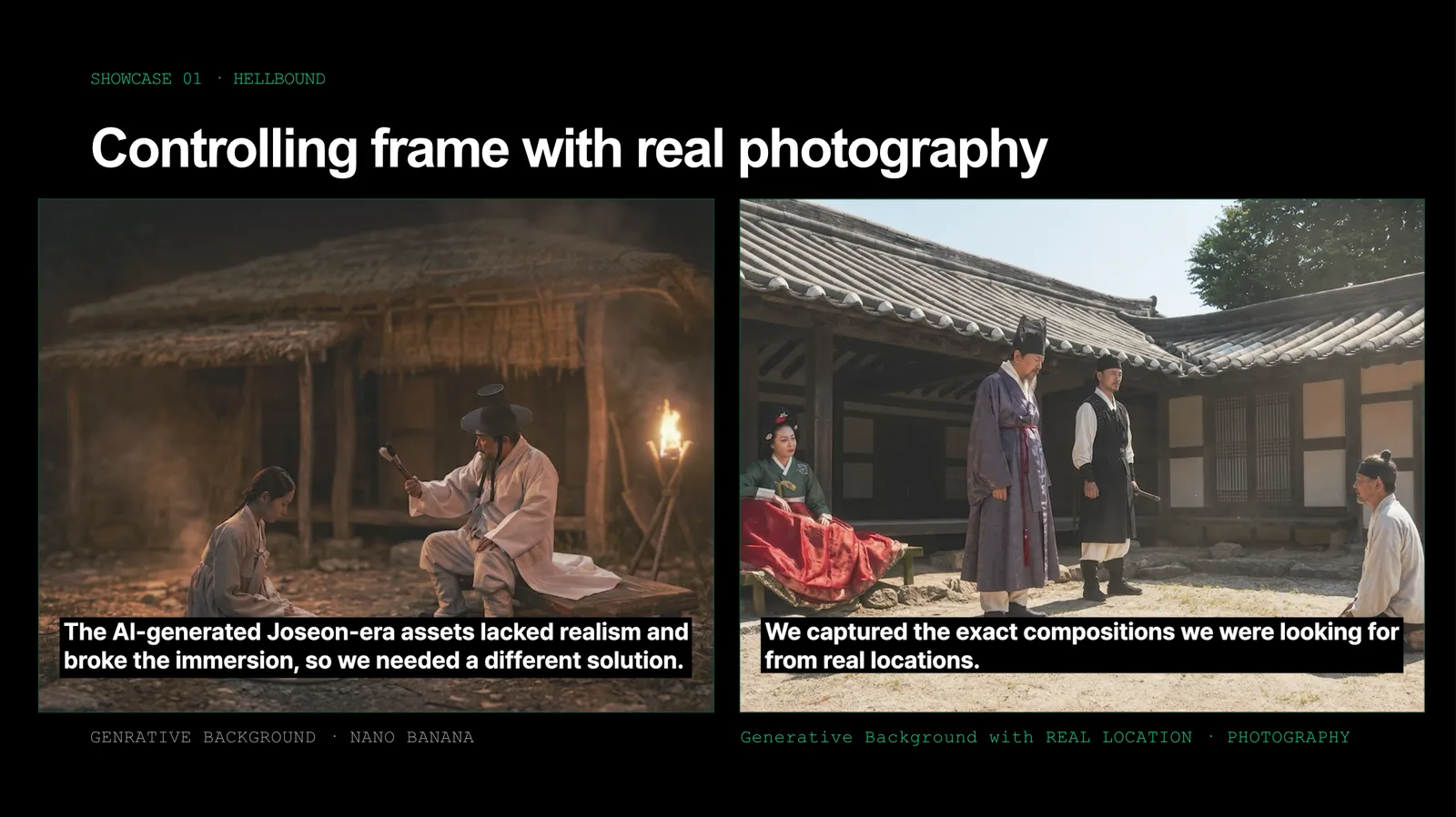
One of the strongest examples came from the Korean feature Hellbound.
Instead of relying entirely on AI-generated environments that felt short of resembling true 18th century Joseon Dynasty architecture, the production team traveled to real historical locations to capture photographic references and assets. Those real-world images then guided AI generation for reference images, ensuring historical accuracy while preserving the authenticity that purely synthetic imagery struggled to achieve.
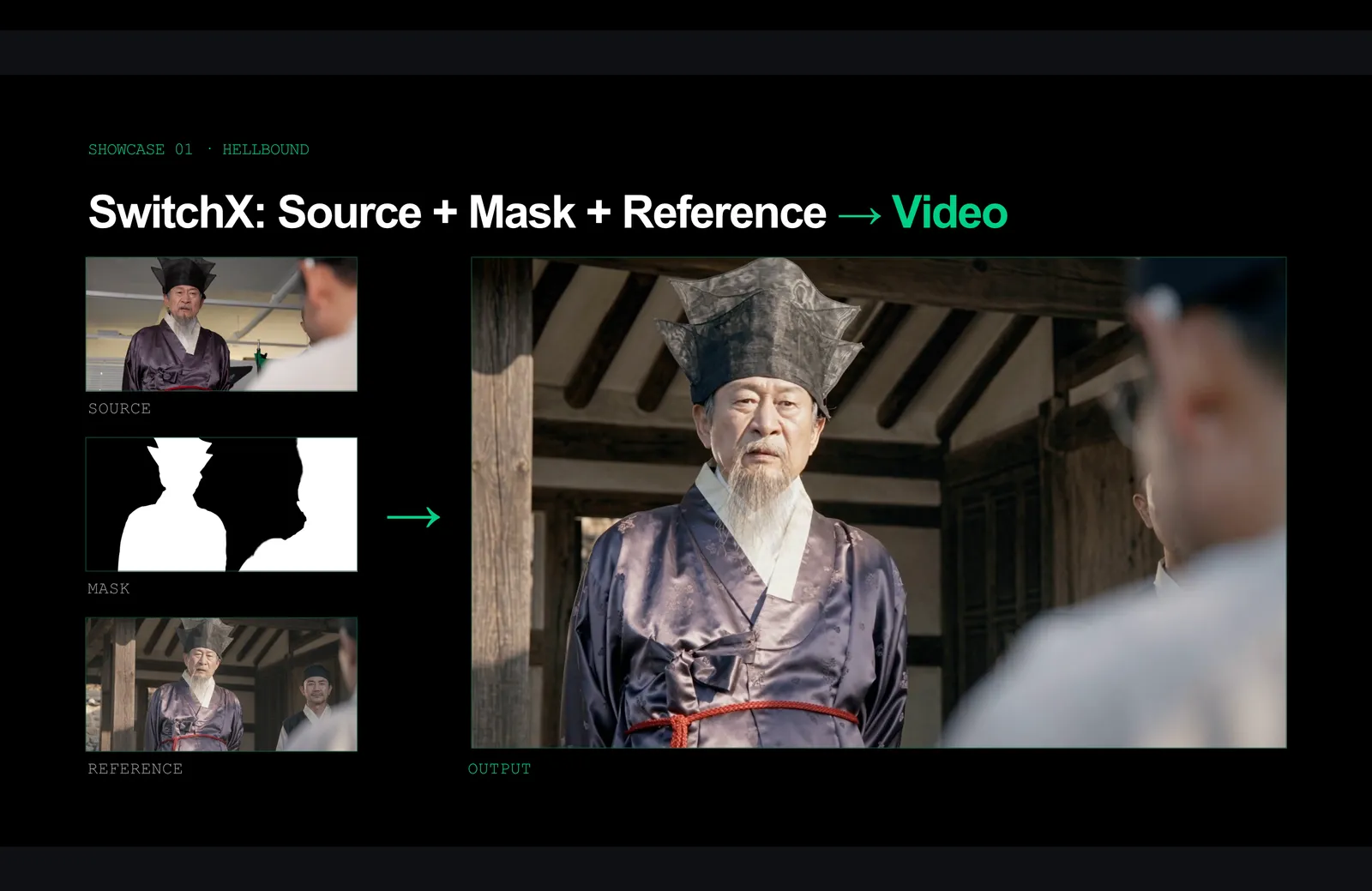
Beeble was also used in real-time on set to quickly test shots, while honoring and amplifying the intent of hair and makeup artists, wardrobe stylists, gaffers, and crew.
Real locations, real photography, and real performances remained the foundation. It was the only showcase of the session to earn applause on its own — the room responding not to the generation, but to the fact that the performance had been preserved.
The fire station piece: playing inside the frame
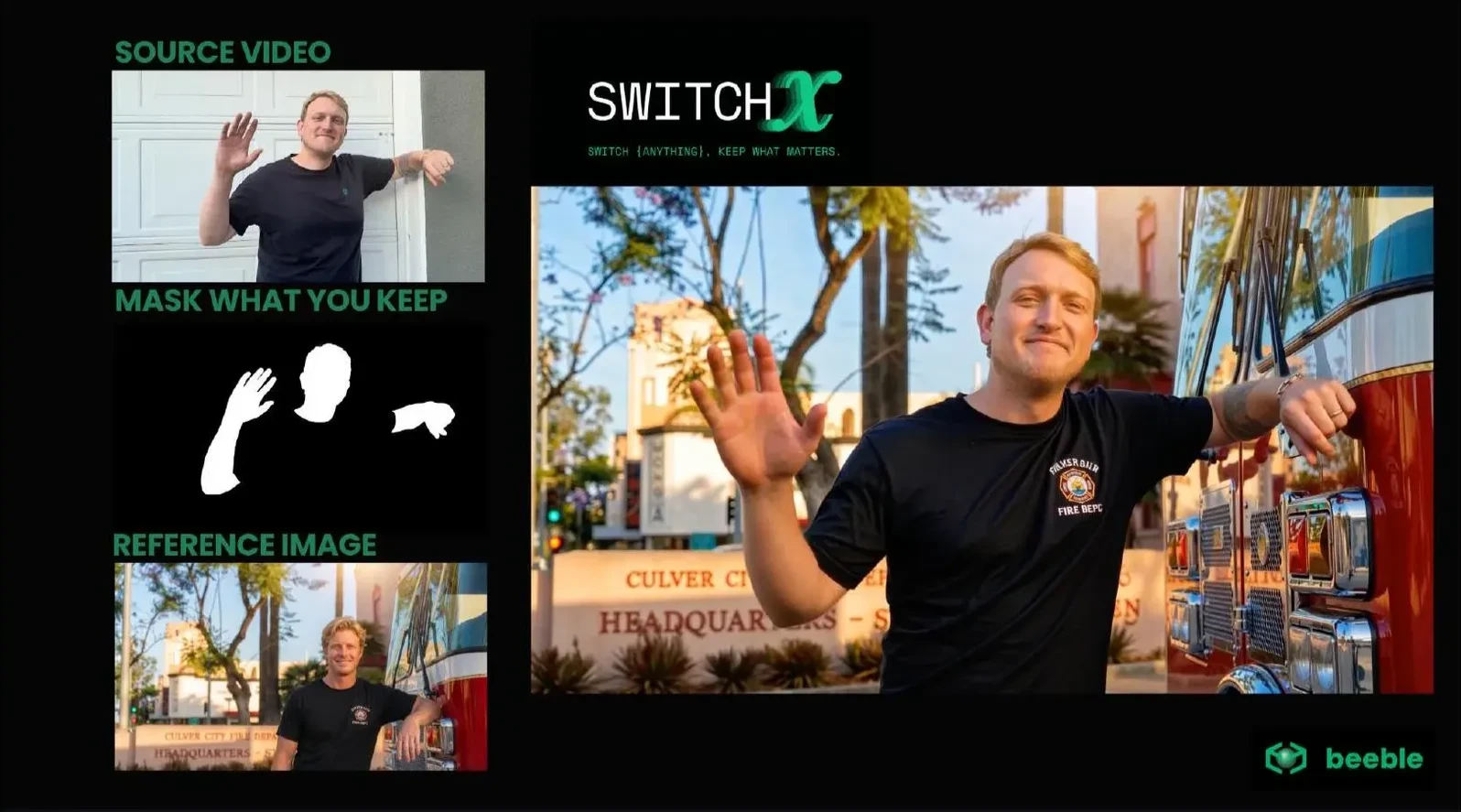
Conrad walked through a separate piece shot at a fire station, using it to show how far pixel control now extends: a subject given a costume change and, as he put it, "a little extra workout" — entirely inside SwitchX, on the same plate, without re-shooting. It's a small example, but it's the clearest illustration of the pixel control principle in practice: change the details, keep the performance.
XGRIDS: the scan becomes ground truth
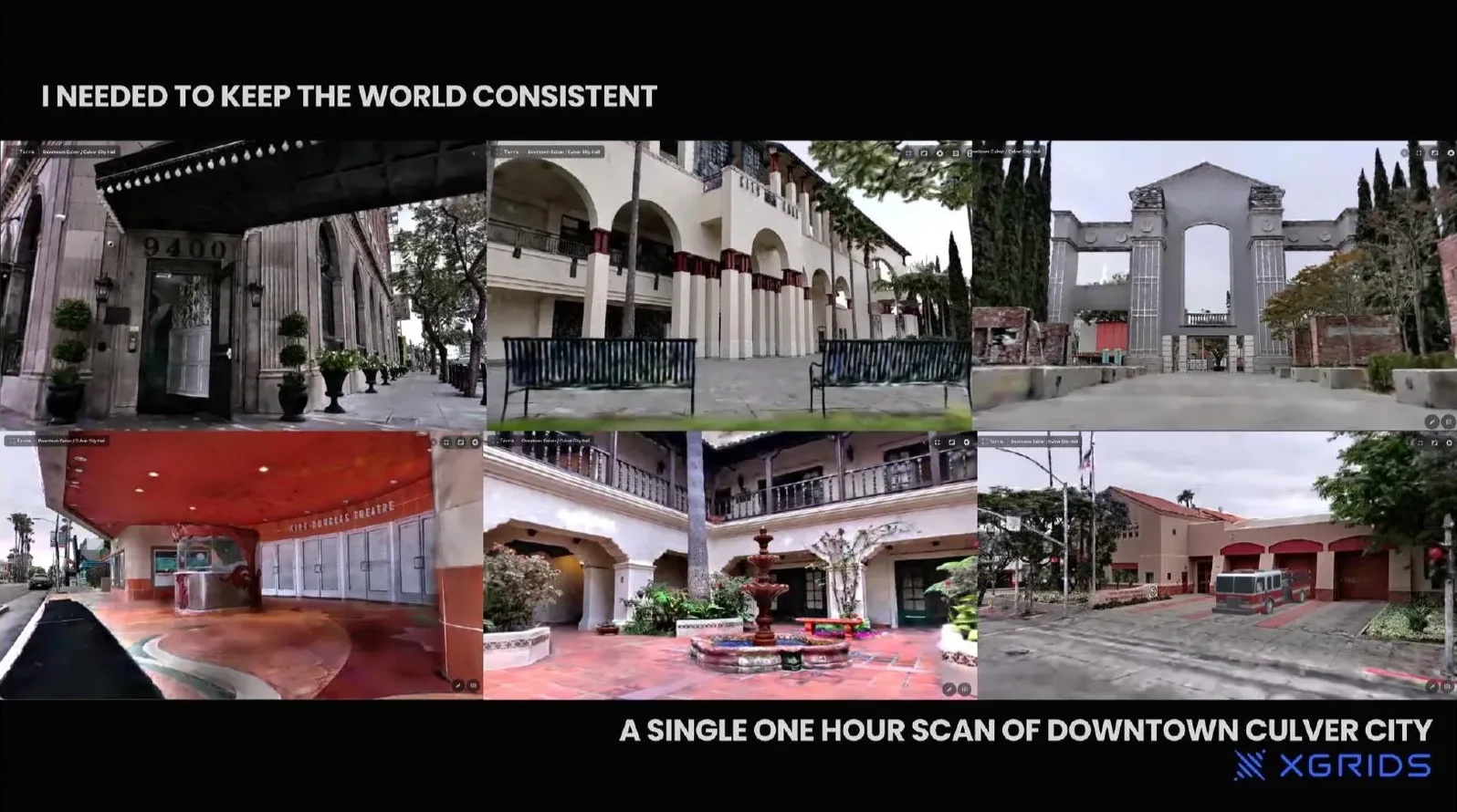
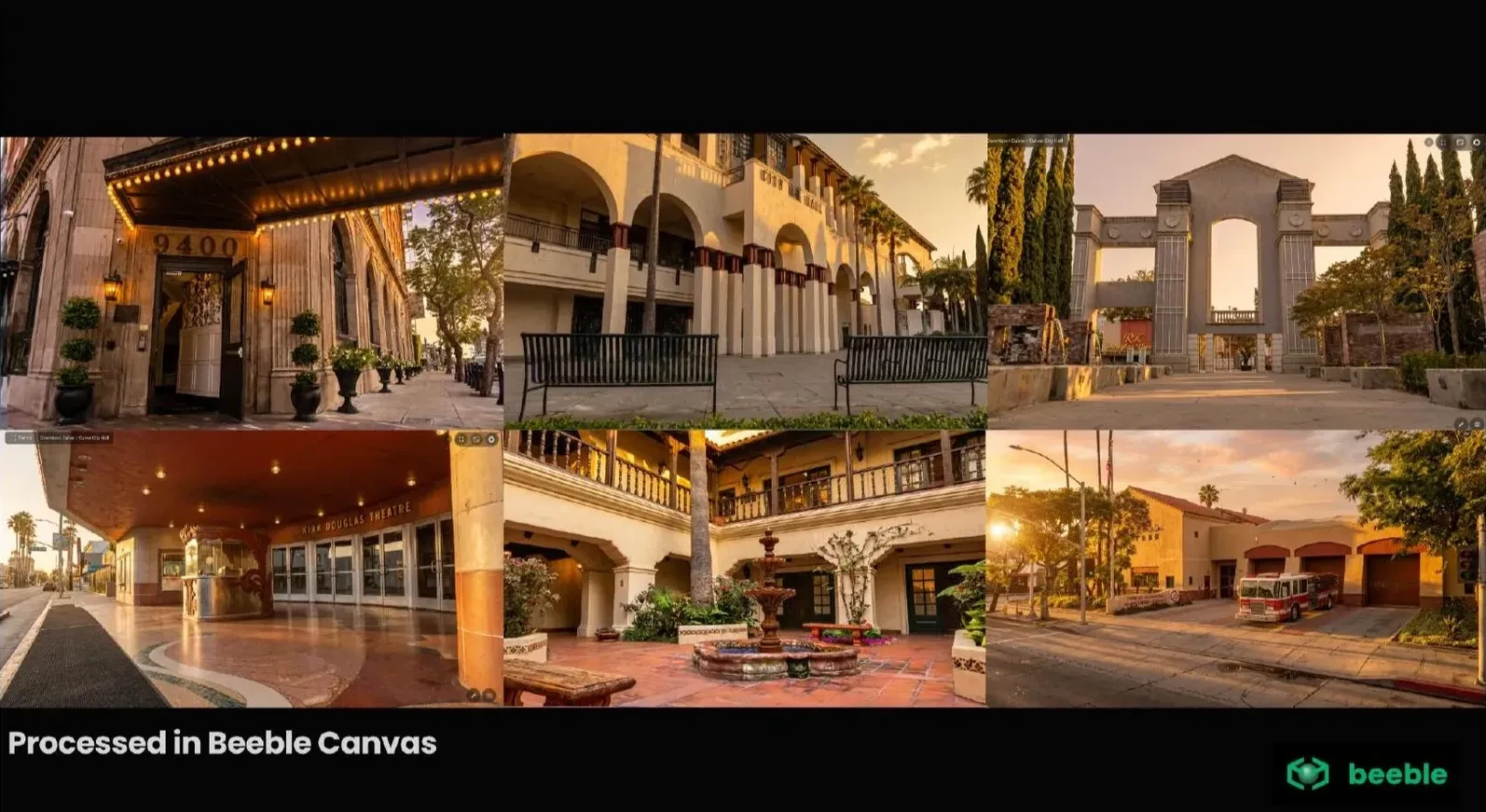
Another showcase explored combining Gaussian Splat captures with generative video. Instead of generating environments from scratch, spatial scans become reliable "ground truth", allowing artists to preserve accurate geometry while using AI to modify appearance.
This points towards a future where spatial capture and generative AI complement one another rather than compete.
NoiseLab: generating worlds that stay under control
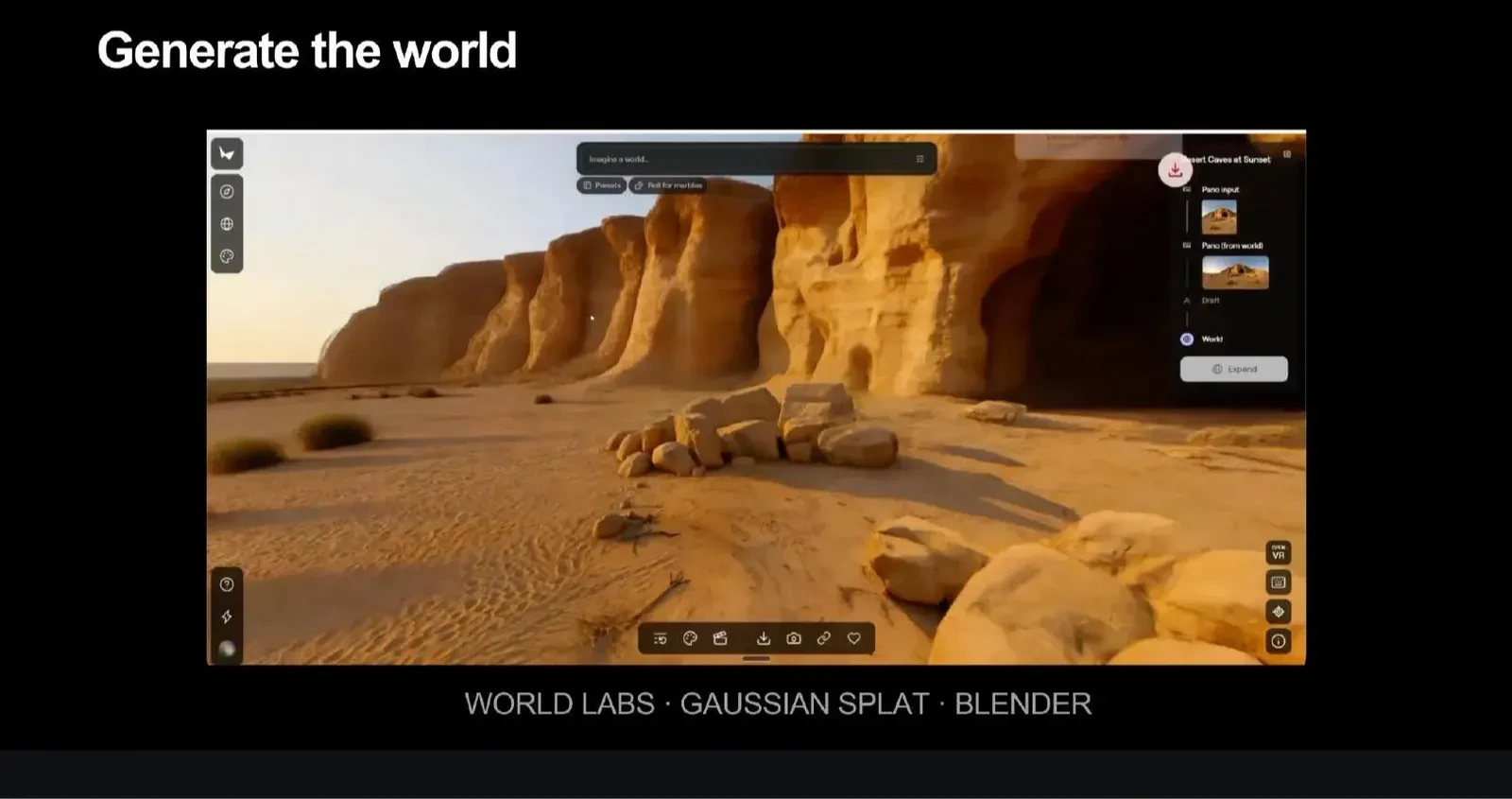
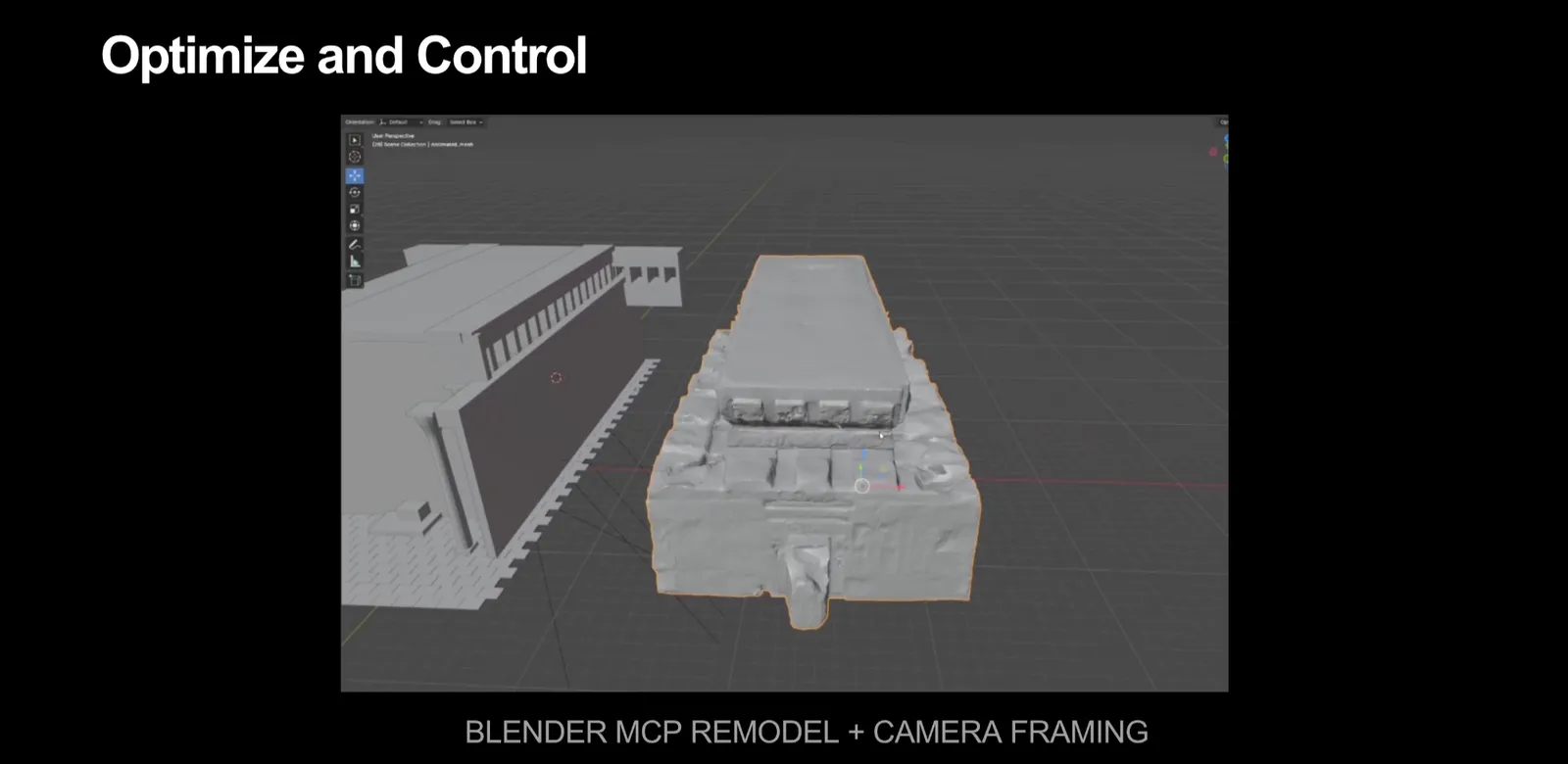
The session also explored emerging workflows where entirely new environments are created using AI while remaining editable inside traditional 3D tools.
Instead of losing creative flexibility, artists retain camera control, composition, and scene management throughout production.
ETC's Pathways: AI inside a professional compositing pipeline
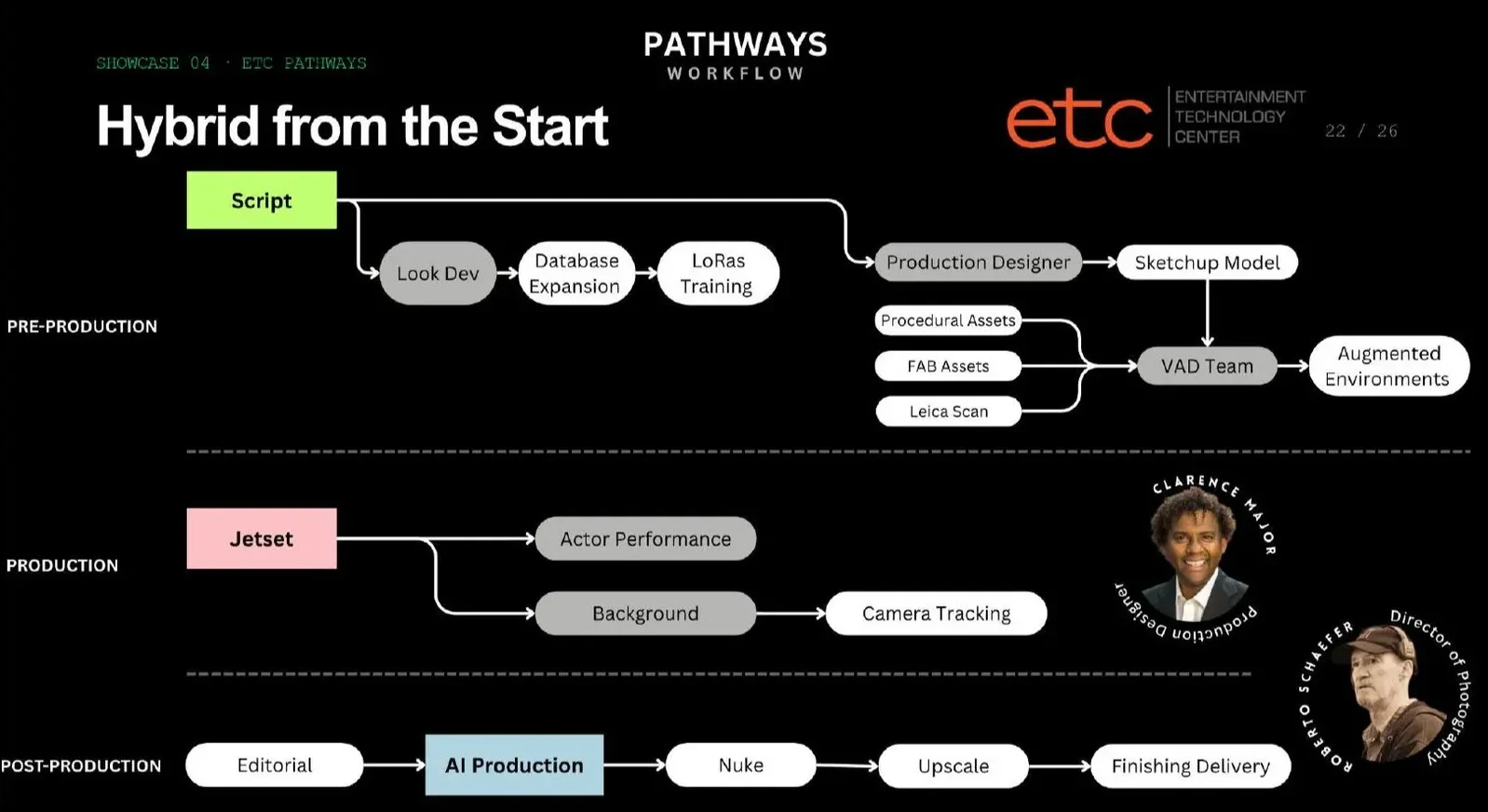
Entertainment Technology Center's Pathways project showed the tools being used in a compositing pipeline.
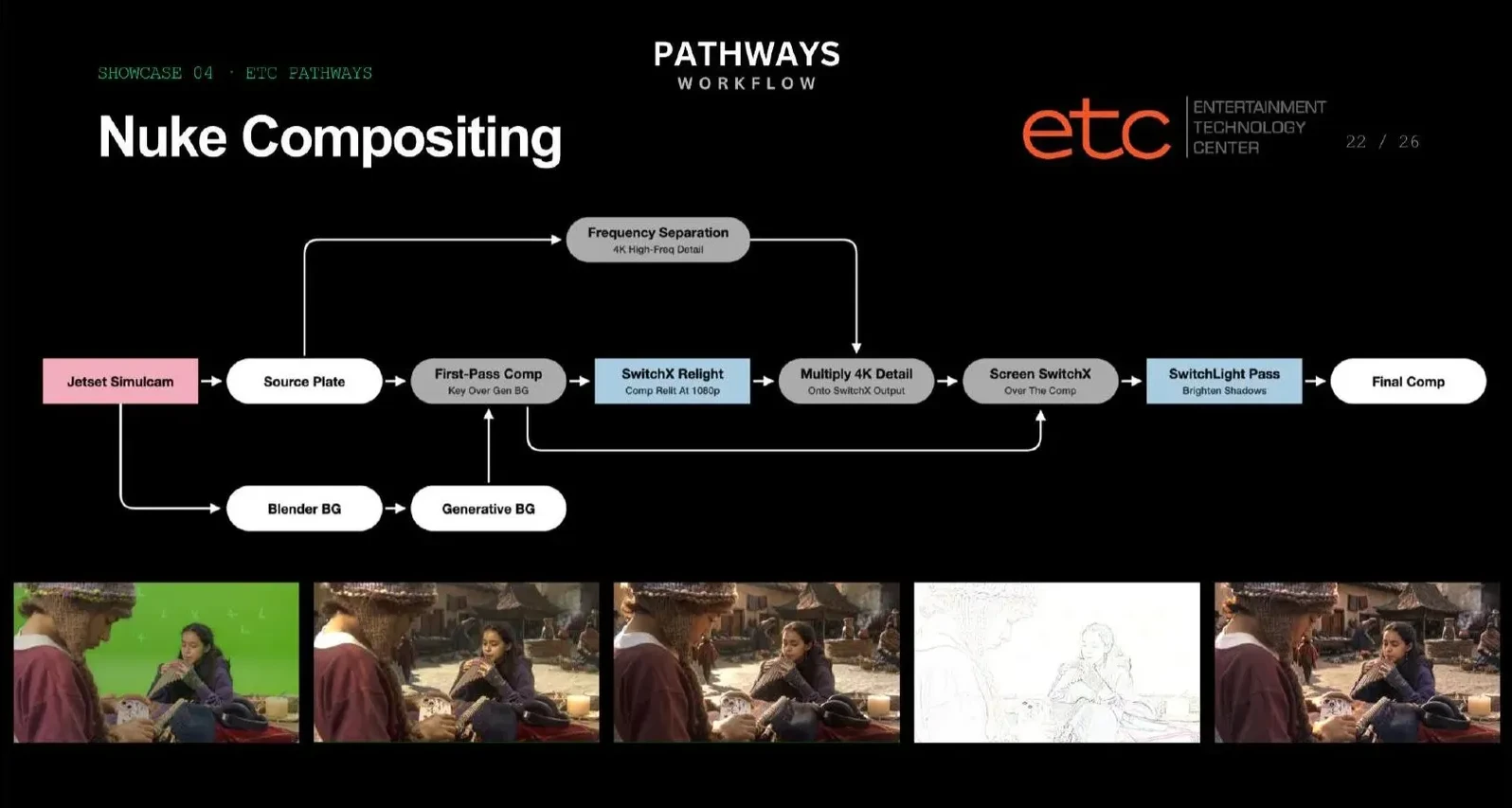
- AI became another stage within a professional compositing workflow in Nuke.
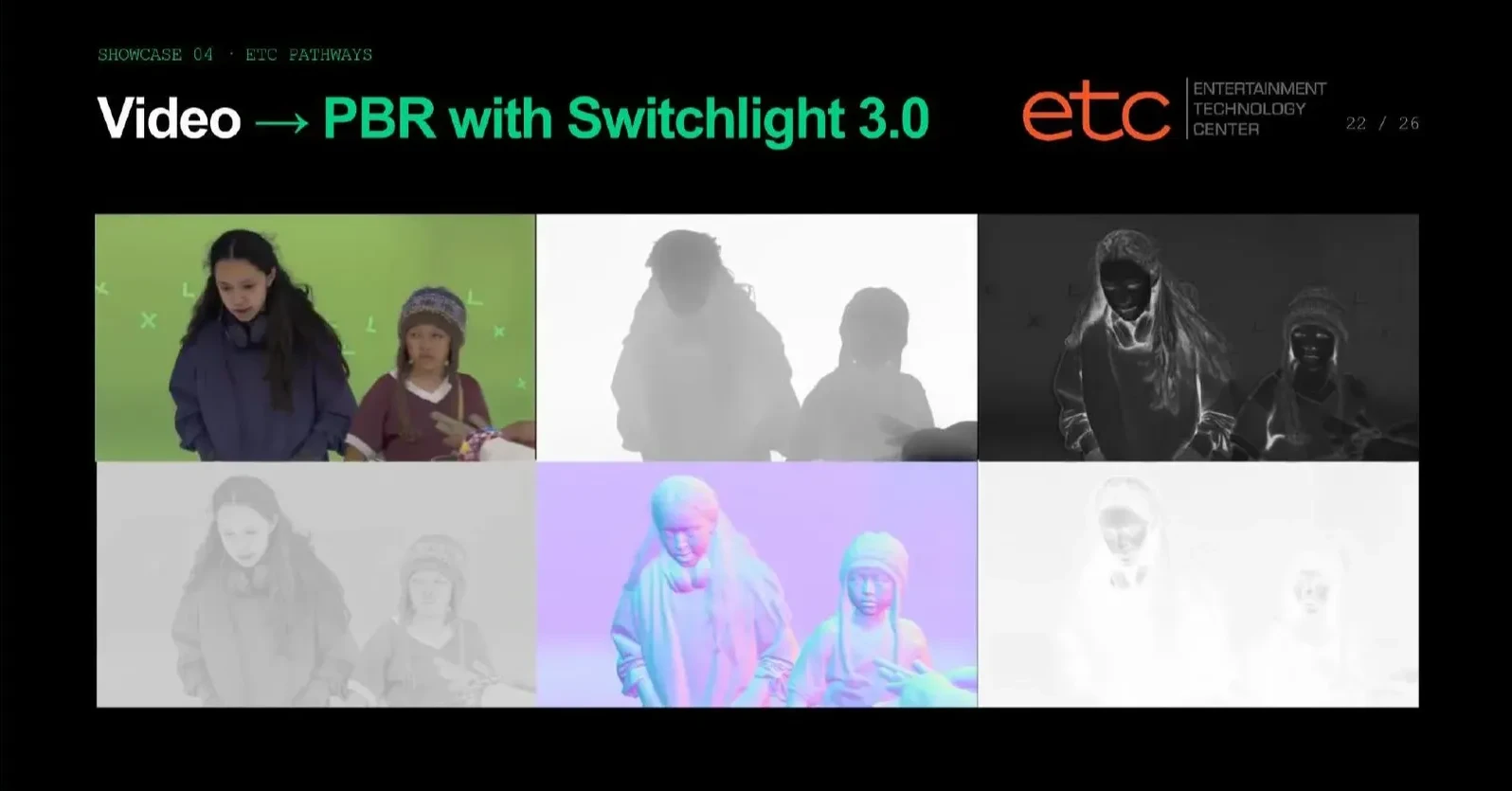
- SwitchLight generated physically based rendering passes.
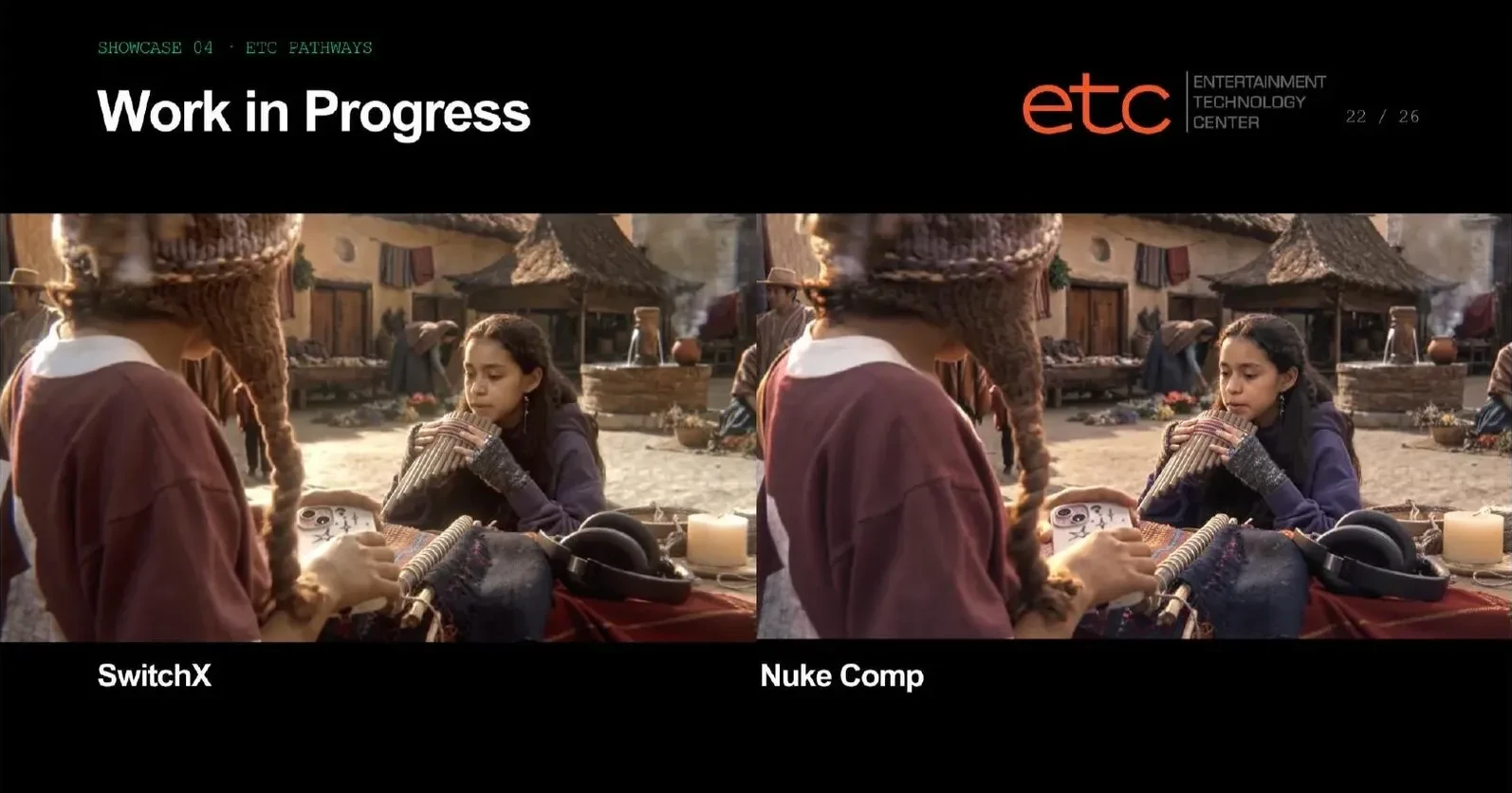
- SwitchX handled controllable video transformations.
Traditional compositing techniques, including frequency separation, relighting, and finishing, completed the pipeline.
The takeaway was clear: AI works best when integrated into established production practices.
Better tools, not bigger models
Towards the end of the discussion, the conversation shifted away from today's models and towards where AI VFX is heading. We shared several ideas that resonated strongly with the audience:
- Domain experts building domain-specific AI models.
- Smaller, more capable creative teams.
- AI systems that understand the broader context of an entire production.
- Above all, greater creative control.
AI is a pass, not a final
Hoon's own summary of the argument, delivered near the end of the talk: AI becomes another pass. Not a replacement for the compositor's pass, the colorist's pass, or the artist's pass — one more stage in a pipeline that still ends with a human making the final call.
The final result still comes from artists making creative decisions, refining shots, integrating multiple techniques, and shaping every frame with intent.
That philosophy sits at the heart of how we think about controllable AI VFX. And on where the technology itself is headed, Hoon left the room with a line worth repeating: this is the worst these tools will ever be. Everything from here looks small in the rear-view mirror.
Thank you, SIGGRAPH.
Thank you to everyone who joined us for the discussion, asked thoughtful questions, and shared their own experiences. The full room reinforced something we've believed for a long time: The future of AI in filmmaking will be defined by how much creative control artists retain.
And that's a conversation we're excited to continue.