Going bigger: UW Credit Union's game-day campaign
"Once we got the relighting right across the plate and the actors, it tightened everything up and became one world."
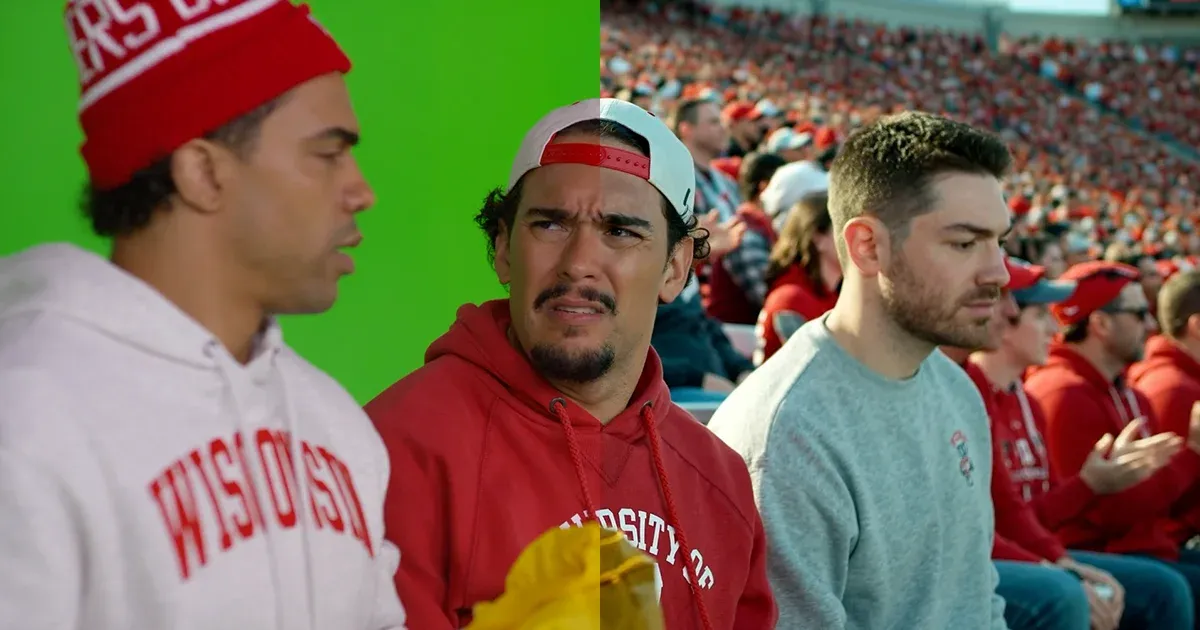
For a new UW Credit Union Rewards Checking commercial, creative agency The Weaponry had an idea built around game day: a referee on the field, fans in the stands and the unmistakable energy of a packed Camp Randall Stadium. Instead of calling a foul on the game, the referee would call one on an unnecessary bank fee. There was just one problem – there was no game.
The production already had six other commercials to shoot in Milwaukee, while Camp Randall Stadium was in Madison, around an hour and 45 minutes away. Shooting there would have meant moving the unit, managing hundreds of extras and still likely extending the crowd in post. The traditional alternative was to compress the action with a long lens, keep the angles tight and never let the audience see just how empty the stadium really was.
Director Adam Jones wanted the opposite. He wanted to go wide. Working with The Weaponry and a partnership between MCM Creative and Re(Ai)lism, Jones shot the performances on green screen. The team then built the game-day world around the actors, combining generative environments, traditional post-production and Beeble to create the scale of a packed stadium while preserving the performances at the heart of the commercial.
The technology didn't just help them execute the original idea. It gave them room to make it bigger. "We can have 63,000 fans in the background and celebrate that with the camera angles," says Jones. "We can create the energy of a full stadium." That freedom continued after the cameras stopped rolling. Lighting could be developed in post. Environments could be refined. An improvised joke between the actors eventually grew into an entirely new ending involving thousands of fans, a stadium chant and a "Kevin Cam."
We spoke with Jones; Adam Albrecht, head of creative agency The Weaponry; Mike Canzoniero, owner of MCM Creative; and Edward McGurn, founder of Re(Ai)lism and AI Creative Director and AI/VFX Supervisor on the campaign, about how they built the workflow, what they learned from putting it into production, and where they plan to take it next.
Where did the original idea for the campaign come from?
Adam Albrecht: UW Credit Union was launching Rewards Checking, which doesn't have scheduled fees. Our concept was essentially: call foul on unnecessary fees.
We developed a scenario where a referee calls a foul, but instead of calling something that happened on the field, he calls a foul on a bank fee. Then we break the fourth wall between the referee and the people in the stands.
We could have shot that very small. We could have gone to a local game with 20 people and cropped everything in. But Adam saw an opportunity to make it much grander using this technology.
The team brought the concept to life exactly as we imagined it, without compromise.
What would creating that stadium environment have involved traditionally?
Adam Jones: We had six other commercials to shoot in Milwaukee, and the stadium is in Madison, about an hour and 45 minutes away.
Traditionally, we'd probably use a 200mm lens and keep the field of view very narrow. Maybe we'd have 200 extras, spread them out, wardrobe them, feed them, wrangle them and then augment that crowd with VFX.
But we'd also have to move the entire unit to Madison, potentially put the crew up overnight and deal with all the logistics around that.
Beeble enabled us to do something completely different. We can have 63,000 fans in the background and actually celebrate that with the camera angles. We can create the energy of a full stadium. That scale lets our imagination, as creative people, be limitless.
Edward McGurn: We weren't just creating a generic stadium either. Adam picked the exact seats where the characters would be sitting. We got a LiDAR scan of the stadium and sent a scout to photograph the views from those seats, so when you're looking left, right or straight ahead, those perspectives correspond to where the characters actually are.
How did MCM approach the project?
Edward McGurn: We're building what we see as an integrated AI production studio centred on performance and hybrid production. MCM already has the infrastructure: green-screen stages, editing rooms, sound mix, colour and post; so with tools like Beeble we're able to bring the whole process together under one roof.
Mike Canzoniero: I'm coming at this as a film director who loves indie film. When AI came along, I saw it as a leveller with Hollywood. Indie film could never keep up with Hollywood in terms of spending and effects, and suddenly there's an opportunity to level that playing field.
At the same time, I love actors. I got into filmmaking largely because I love the experience of directing actors. What Beeble offers me is the opportunity to have my cake and eat it. I can dream up sets we might not have been able to afford before, but I still get the luxury of working with great actors and getting great performances.
For me, that's the hybrid model. It's not right for every scenario, but keeping actors in the mix is a really important part of the magic.
How did you know the approach was going to work?
Edward McGurn: We tested it. We had a lot of questions to answer before putting the company's reputation behind the workflow. How would the backgrounds hold up? How would the perspective work? What would happen with green spill? Could we integrate the foreground and background convincingly?
We took the early script, shot a couple of test scenes and put them through SwitchX with a basic generated background. The first results blew us away.
We were trying to establish whether we could credibly offer this as a service and stake our reputation on being able to deliver it. Once we saw those tests, we knew there was something there.
Mike Canzoniero: It was shockingly intuitive how it handled our test, and it gave us the confidence that we could deliver. Perspective was something I was particularly worried about. We've been doing green screen forever, and I know what a nightmare it can be getting a proper plate to work. Now you're adding 60,000 extras and trying to make them feel real and make the perspective match the lens.
Edward McGurn: The important distinction is that this commercial wasn't impossible to make before. It wasn't possible at this budget range before. We saved at least 30% compared to a traditional post workflow.
Adam Albrecht: Not even close. This isn't a national bank buying a Super Bowl commercial. It's a regional credit union in Wisconsin.
That's what was exciting – suddenly we could think at that scale.
Where did Beeble make the biggest difference?
Mike Canzoniero: For me, the lightbulb moment was the Beeble relight. Until then, it still felt like a great green-screen composite with this dynamic background. But once we got the relighting right across the plate and the actors, it tightened everything up and became one world.
It didn't just happen. Our team played with it a lot to find the right relight and the right reference. But when we got it right, it clicked. That's when I thought: this is a tool we can use in movies, we can use in commercials.
Adam Jones: We were able to shoot a lot faster because of the flat lighting. We weren't constantly moving things around. We could concentrate on performance and then make some of those cinematography decisions in post – colour, light, time of day.
I didn't feel like I had less creative control. I felt creatively liberated.
What did the workflow look like from set through to the finished spot?
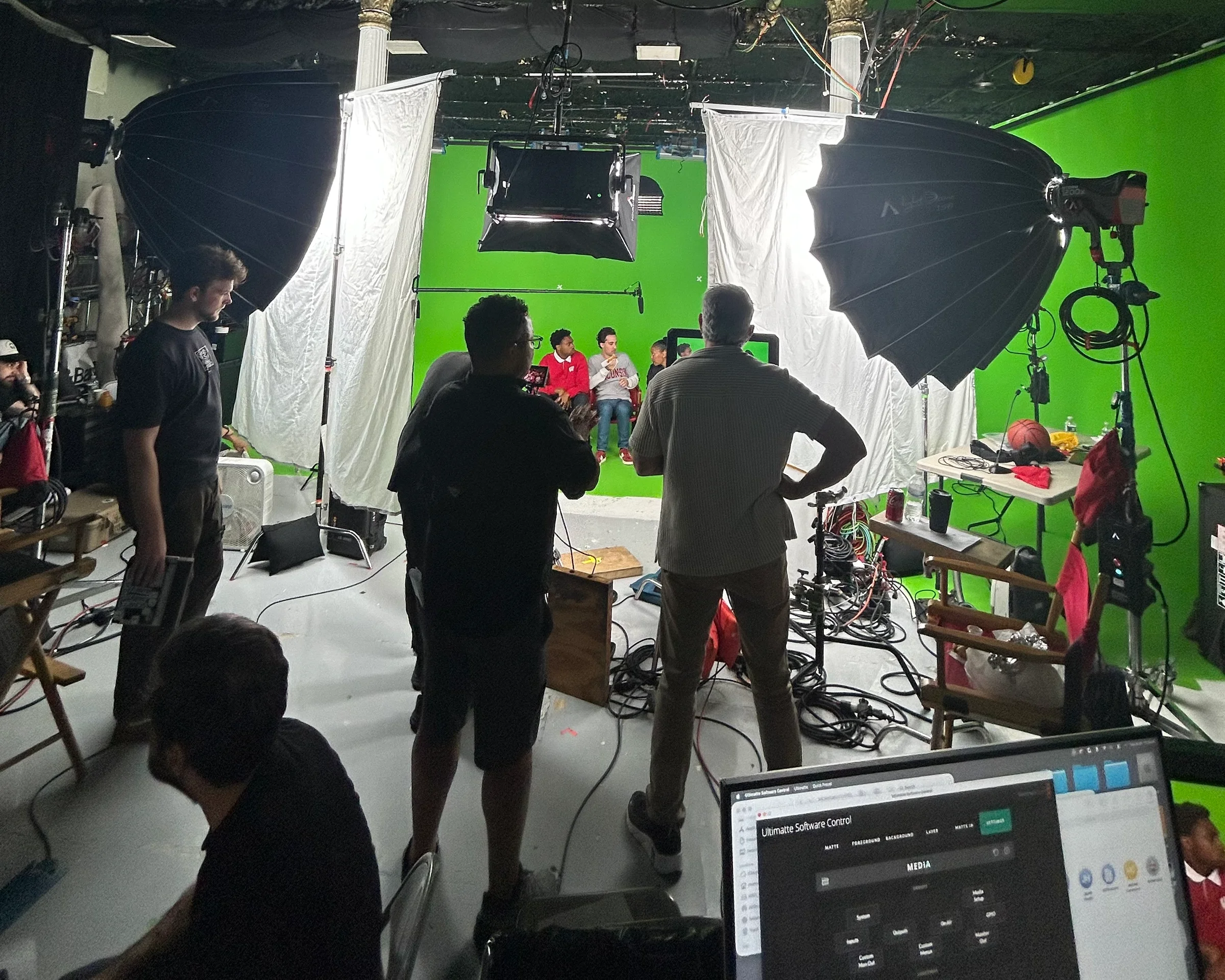
Edward McGurn: We shot on green screen and had reference plates available on set, but those weren't the final backgrounds. We deliberately lit everything fairly flat and neutral, knowing that we could develop the lighting later with Beeble.
Mike Canzoniero: We actually had our Beeble tech on set, and within about 20 minutes of shooting we were able to show the client something much closer to what the final result was going to look like.
The person we trained on Beeble came to the table with skills in DaVinci, After Effects and Blender. He's a colourist and an editor, so he was already well versed in post and effects work. But he was essentially iterating a workflow for himself where there wasn't an existing model to follow.
We were learning rules as we went and becoming more confident about what we'd do differently next time. I see the post workflow as an assembly line of skilled people: an editor, sound designer, generative artist working on plates, compositing and then the Beeble and colour work.
There were a lot of people working on this spot and a lot of labour involved. It's about elevating the quality, not one kid sitting in a basement prompting three things and suddenly having an ad. That's not the workflow.
Edward McGurn: This still went through colour, sound mix, sound design and editing. It was a full post-production process, just in a slightly different configuration.
Did working this way change how you directed the actors?
Adam Jones: Not really. What I would have had the actors do would have been exactly the same if we were at Camp Randall Stadium. Professional actors are already used to imagining what's around them.
I love being on location, and I don't see this replacing physical production, but there are a lot of situations where it makes sense to create the world around the actors.
Mike Canzoniero: I would challenge you to get that kind of nuanced comedy performance from a generative actor right now. We're working with generative performance ourselves, and it's not there yet – especially for comedy or anything subtle. Right now, real actors are the way to go.
If you can put those real actors into AI environments where the audience can't tell the difference, that's where this hybrid approach becomes really interesting.
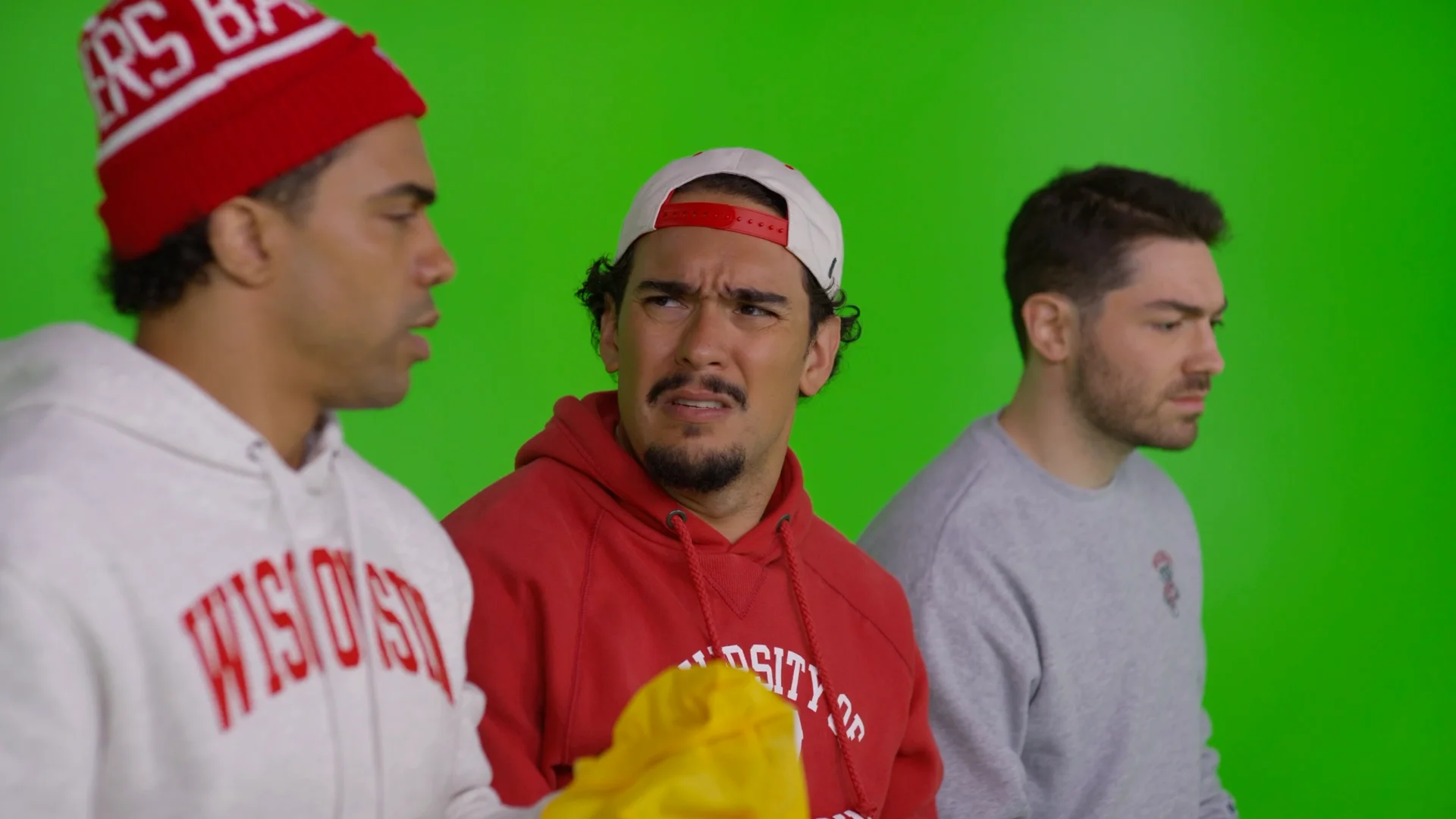 Green-screen plate
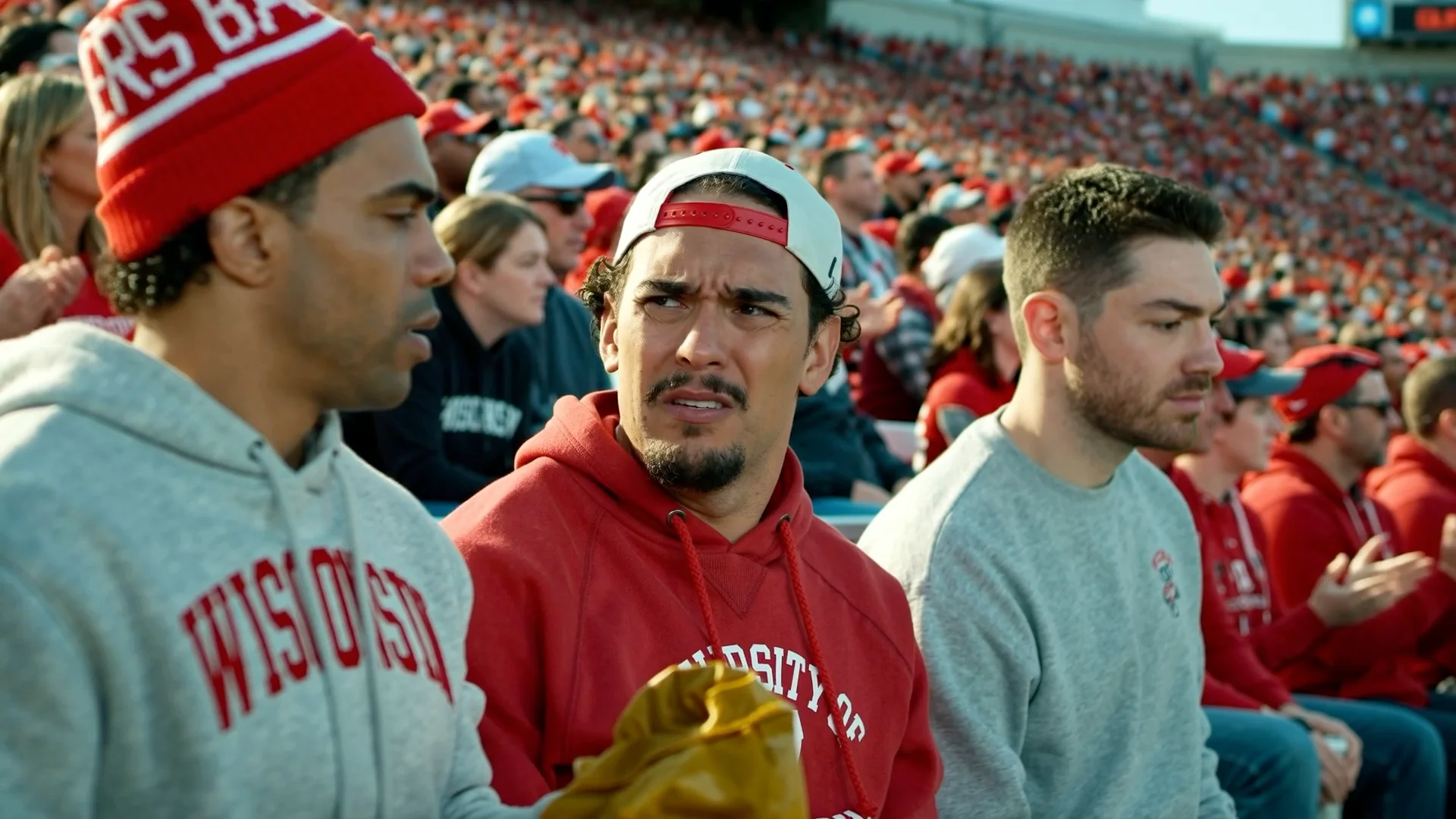 Final with Beeble
And it sounds like the flexibility continued after the shoot.
Adam Albrecht: That's where we really saw the best of both worlds. Because we had real actors, we could try alternate lines on set. One of those gave us a completely different idea for the ending.
The character asks, "How did the ref know your name was Kevin?" and the response is basically, "Everyone knows I'm Kevin."
Once we saw that in the edit, we realised there was an opportunity to create a completely different ending.
Edward McGurn: That actually came from James, our generative artist. I asked if we could do anything bigger, and he suggested having the crowd chant "Kevin." Then it became, "Let's put him on the jumbotron," and from there we got to the "Kevin Cam."
Mike Canzoniero: To me, that sounds like human creativity, not AI coming up with ideas. It's people being creative with tools and getting the chance to iterate in a way that human creativity does. It comes back to the quality of the work you can get when you use AI as a tool and don't expect it to do everything for you. There's no magic button.
Adam Albrecht: It was collaboration between the director, agency and production team. We weren't protecting our individual ideas. We were asking: how do we make the best spot?
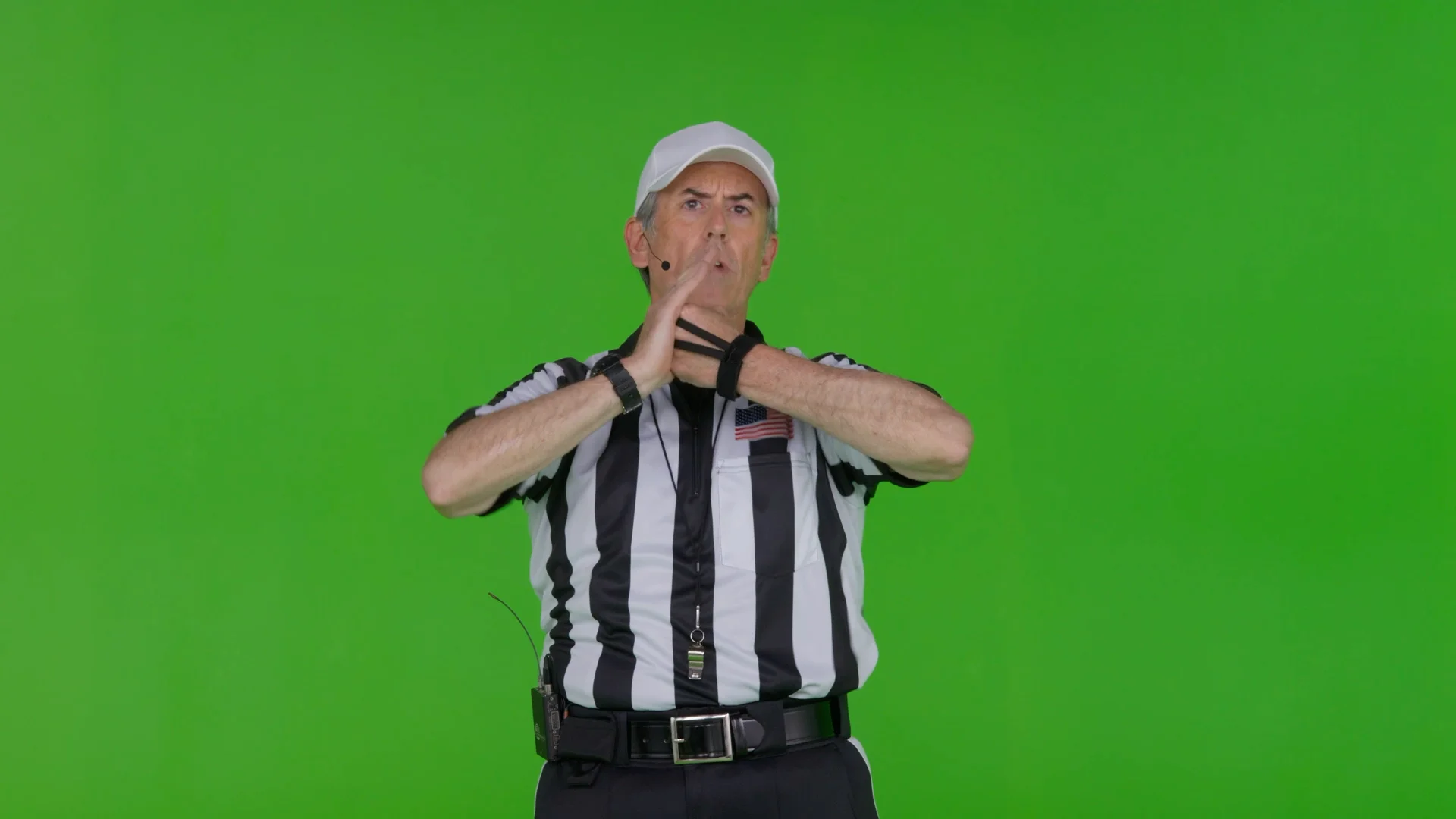 Green-screen plate
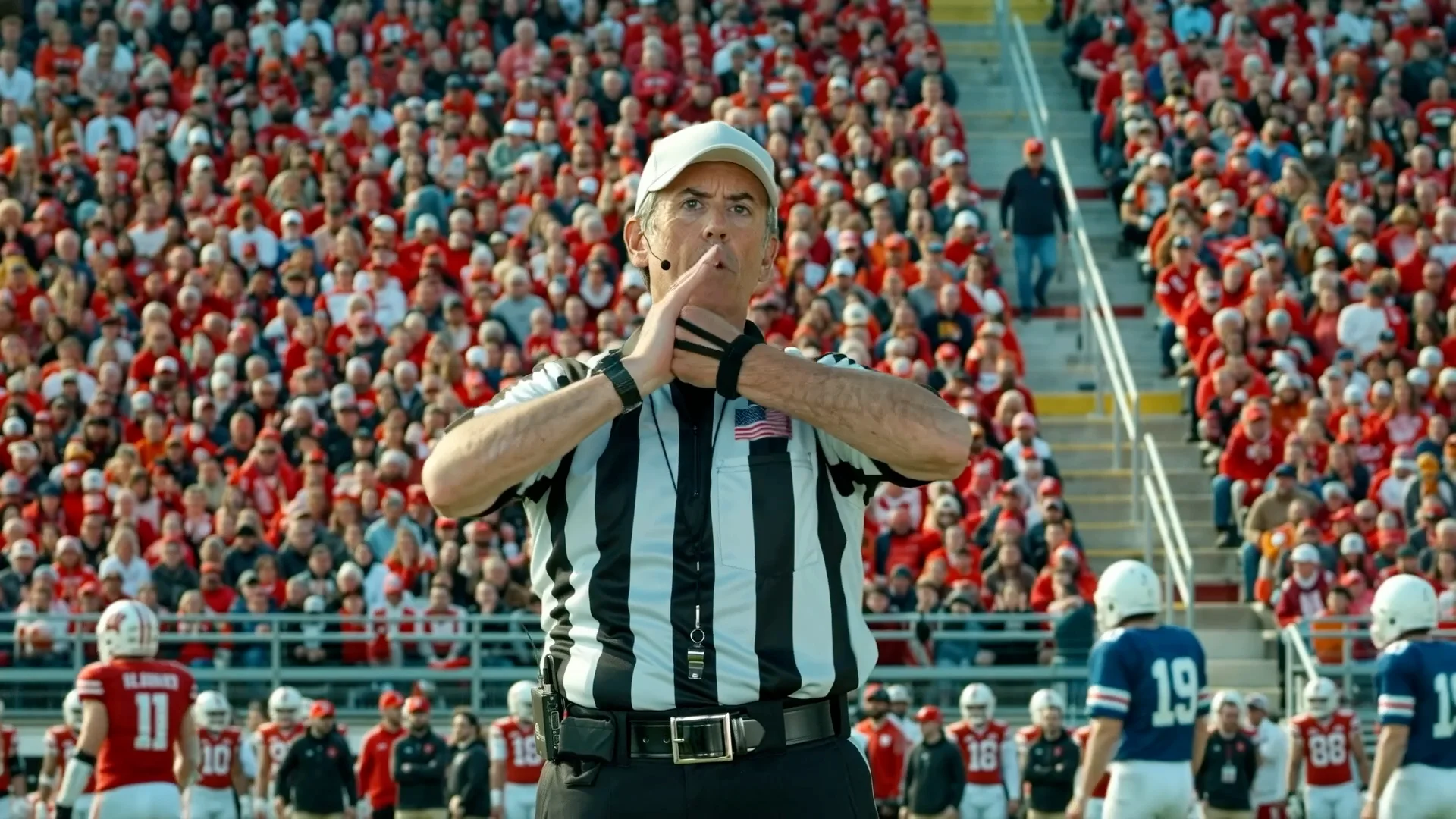 Final with Beeble
Adam, from an agency perspective, did the experience change how you think about what's possible for clients?
Adam Albrecht: We went into it with high hopes around access, timing and scale, and the technology lived up to that.
Before we started in June 2026, so much of this was theoretical. By the end of the summer, we'd seen that it was real, implementable and capable of producing what we wanted.
For people who come up with ideas, that's incredibly exciting. We can think big and believe we can bring those ideas to life. It's not just theory anymore.
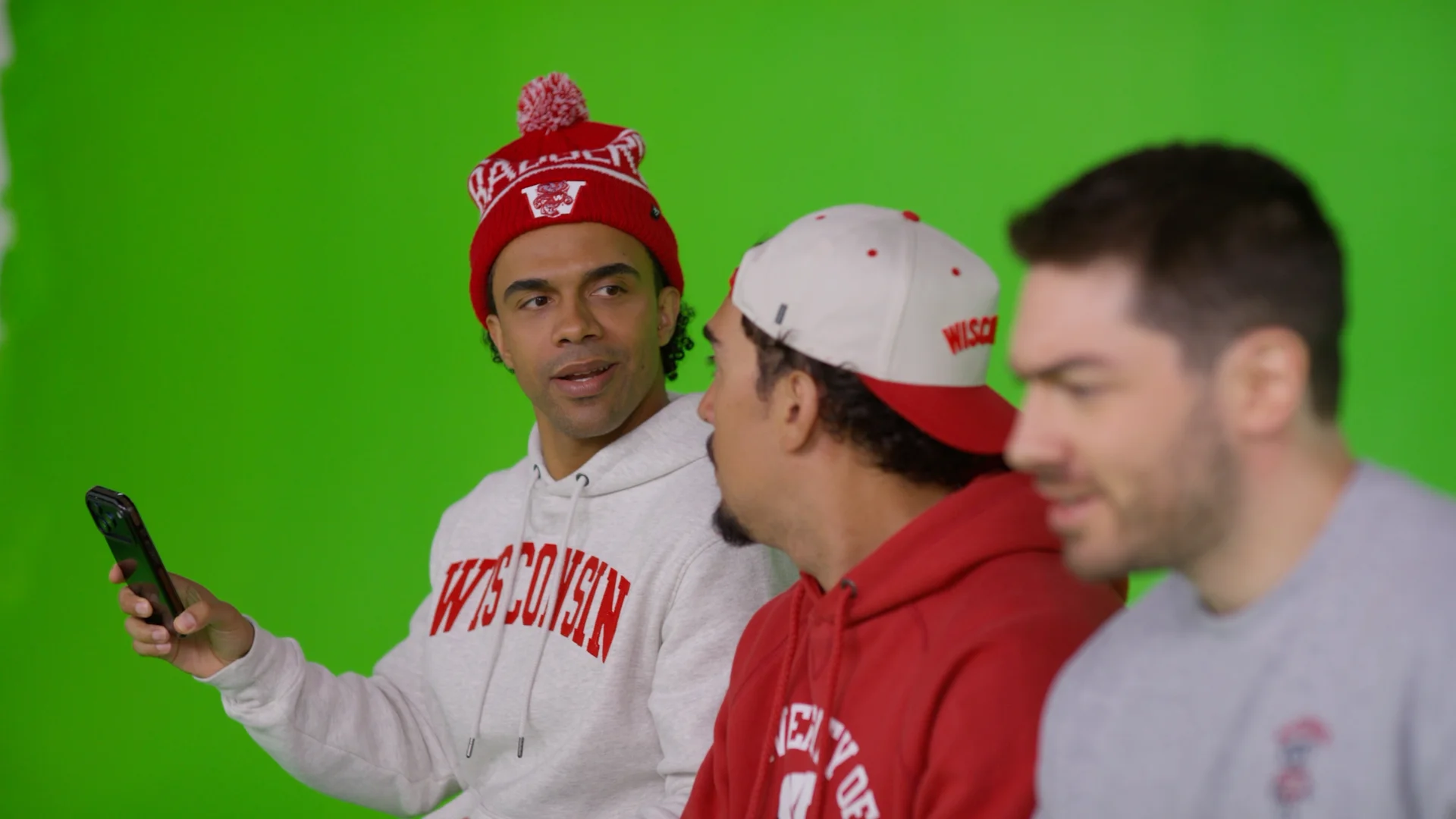 Green-screen plate
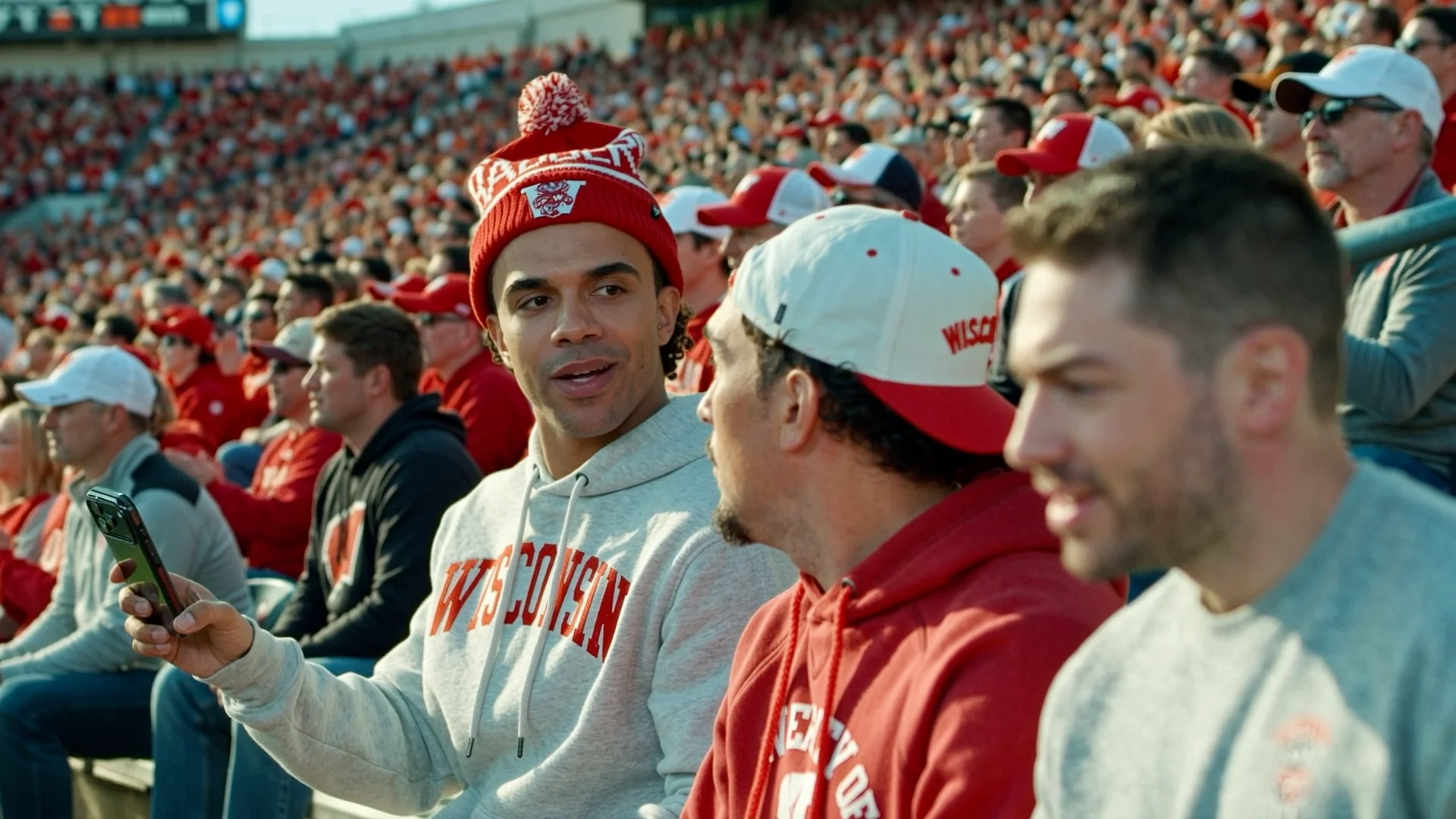 Final with Beeble
What are you looking to push further on the next production?
Mike Canzoniero: Movement. That's the next thing for us. These were locked-off cameras. On the next spot, we're moving the camera and seeing how Beeble handles parallax.
We're also using an XR production workflow. We're pre-building an Unreal environment that we can work with on set, and then we'll develop that further in post with Beeble.
What does having this capability mean for you as a director?
Adam Jones: As a commercial director, I'm competing against two or three other directors on every job I pitch. Right on the heels of this UW project, I was up for a gig where my competitors' approaches included a constructed set, a volume wall, and a live comp on green screen. I was the only one saying, "What about this?"
Ed helped me with the treatment, so we could practically visualise the spot and show what this approach could offer, and we landed it.
Right now there's a window where understanding these tools can keep me on the cusp of the wave.
For me, it's a superpower. I'm embracing it.
Credits
- Adam Jones – Director of the UWCU spot
- Adam Albrecht – Head of the creative agency on the project (The Weaponry)
- Edward McGurn – Executive Producer | Head of AI Production, MCM Creative Studios | Founder, Re(Ai)lism
- Mike Canzoniero – Owner | MCM Creative Studios
- Jeremiah Black – VFX Artist and Beeble Artist
- James Hussey – Generative Artist
- Gab Grieco – Marketing Manager | MCM Creative Studios
- Sophie Gould – Production Coordinator | MCM Creative Studios