FilmEvolve: Iterative filmmaking with Beeble
"AI should execute creative intent; it shouldn’t make the creative decisions."
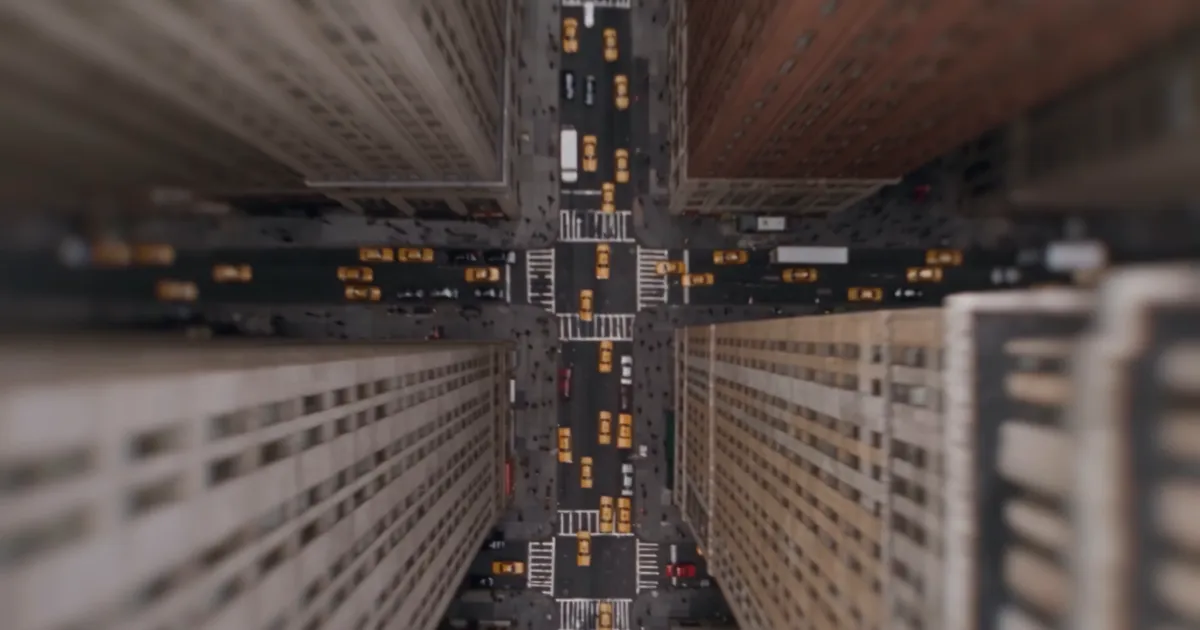
For filmmakers, some of the biggest creative decisions have traditionally become fixed the moment the camera stops rolling. The weather you had, the location you could afford, and the on-set lighting all become part of the image you take into post-production. FilmEvolve sees AI changing that relationship, giving filmmakers more room to refine what they have already created.
Founded by filmmakers Mark Harris and Avi Mack, FilmEvolve is a production and consulting company focused on integrating AI ethically into professional filmmaking workflows. Its approach is firmly rooted in practical production: working with actors, crews and captured footage, then using tools such as Beeble to extend what can be achieved with those ingredients.
FilmEvolve is now applying that philosophy to a slate of projects, including upcoming feature films for which Beeble is being deployed from pre-production through production and post.
We spoke with Mark and Avi about why they see AI as a filmmaking tool, how relighting is changing decisions on set, and why creative control remains at the center of their approach.
Can you introduce FilmEvolve and what you’re working on?
Mark Harris: I’m a film writer, TV producer and executive by trade, and a partner with Avi in FilmEvolve. We’re a consulting and production services company helping integrate AI ethically into professional filmmaking and media workflows.
We also have our own slate. That includes The Platform, a short film currently on the festival circuit, as well as premium series and multiple feature films in development.
A big part of what we do is helping filmmakers and producers understand how these technologies can fit into professional production without replacing the people who make films.
What does integrating AI “ethically” mean to you?
Avi Mack: From the beginning, our question was: how do we engage with this technology without using it to replace people?
We could see that AI was developing incredibly quickly and would change filmmaking substantially. We wanted to understand how it could help us make films differently, make more ambitious work, and give more people access to filmmaking tools, without replacing actors or crew members.
There are filmmakers around the world who don’t necessarily have access to large crews, infrastructure, or budgets. If these tools allow them to explore their creativity and tell stories they otherwise couldn’t make, that’s incredibly exciting.
For us, it’s about amplification rather than replacement.
Mark Harris: When people hear AI, they often think about generative images or video. But I think its strongest application is as a production tool.
That’s why Beeble was so interesting to us. It solves recognizable filmmaking problems. It isn’t about asking AI to make the film for you; it’s about giving filmmakers another set of tools with which to make creative decisions.
What opportunities does that open up in production?
Mark: We think about it as a hybrid workflow. We’re shooting practically, with actors, and we’re not replacing performances. But once that photography exists, AI gives us another creative pass.
Previously, you were largely committed to the lighting you captured or the background that was there. Now those elements can become iterative.
Production starts moving from “we hope we got it” to “let’s keep refining it.”
There’s also an opportunity to spend more of the production day on the things that matter most. If you can reduce the time spent capturing certain inserts or dealing with logistical limitations, you can spend more time working with performers and concentrating on the emotional center of the scene.
How does Beeble specifically change that relationship with what you capture?
Avi: Weather is a really simple example. Every filmmaker has been in a situation where a scene is supposed to take place on a beautiful sunny day, but the day you have to shoot is overcast.
Traditionally, you might simply have to accept that because the cast, crew, and location are booked and you can’t afford to move the shoot.
Knowing you can revisit the lighting afterward removes some of that pressure. You still want to get the shot as close as possible in camera. That doesn’t change, but you’re no longer completely stuck with circumstances you couldn’t control.
We have an example on a shoot in Greece. We had been told the sun would set over the ocean at the beach we were using, but when we arrived, we discovered it actually set on the other side of the island.
The footage itself was beautiful, but it wasn’t what we had originally imagined. As a test, I used Beeble to relight it as sunset footage. We created both a grounded version, with the subject more silhouetted, and a more cinematic version. The original performance and photography remained intact, but suddenly we had several creative directions available to us.
That’s the difference: you don’t just have the opportunity to fix something. You have options.
Does knowing that affect how you plan a shoot in the first place?
Mark: Completely.
I think Beeble has the ability to make lighting and location feel iterative rather than permanent. It becomes less about capturing the absolute final image when you shoot and more about capturing the ingredients for the final image.
We’re developing a slate of three feature films in Oklahoma and thinking about Beeble across pre-production, production, and post.
It changes some very fundamental production questions. If we have a scene inside the hull of a spacecraft, for example, do we need an expensive practical build? Do we shoot it on an LED volume? Or could we shoot in a much simpler environment and reimagine that space later?
Knowing these options exist changes the conversation before you ever get to set.
Could these tools become part of the on-set workflow too?
Avi: That’s something we’re very interested in.
Could we have someone on set whose job is to work with these tools while we’re shooting? We could capture a shot, quickly explore what it might look like with a different lighting treatment or environment, and use that information to influence the next decision.
The important part is that it would still be iterative afterward. We’d be capturing high-quality footage, but we’d also have a much clearer indication of what the eventual shot could become.
Large productions already use extensive previs and on-set VFX infrastructure to help filmmakers understand what a final image might look like. What’s exciting is the possibility of bringing some of that capability to productions that don't have a $200 million budget.
Has that made you consider ideas you might previously have dismissed as too ambitious?
Mark: All the time. One of our upcoming projects is Affliction, a psychological thriller that we’re currently planning and likely including as part of the Oklahoma slate. From the outset, we’ve been exploring how virtual production and Beeble could help us reimagine environments and build scale into the practical shoot.
That fundamentally affects what you believe is possible for an independent film.
You also tested Beeble on The Platform. What did you learn from that?
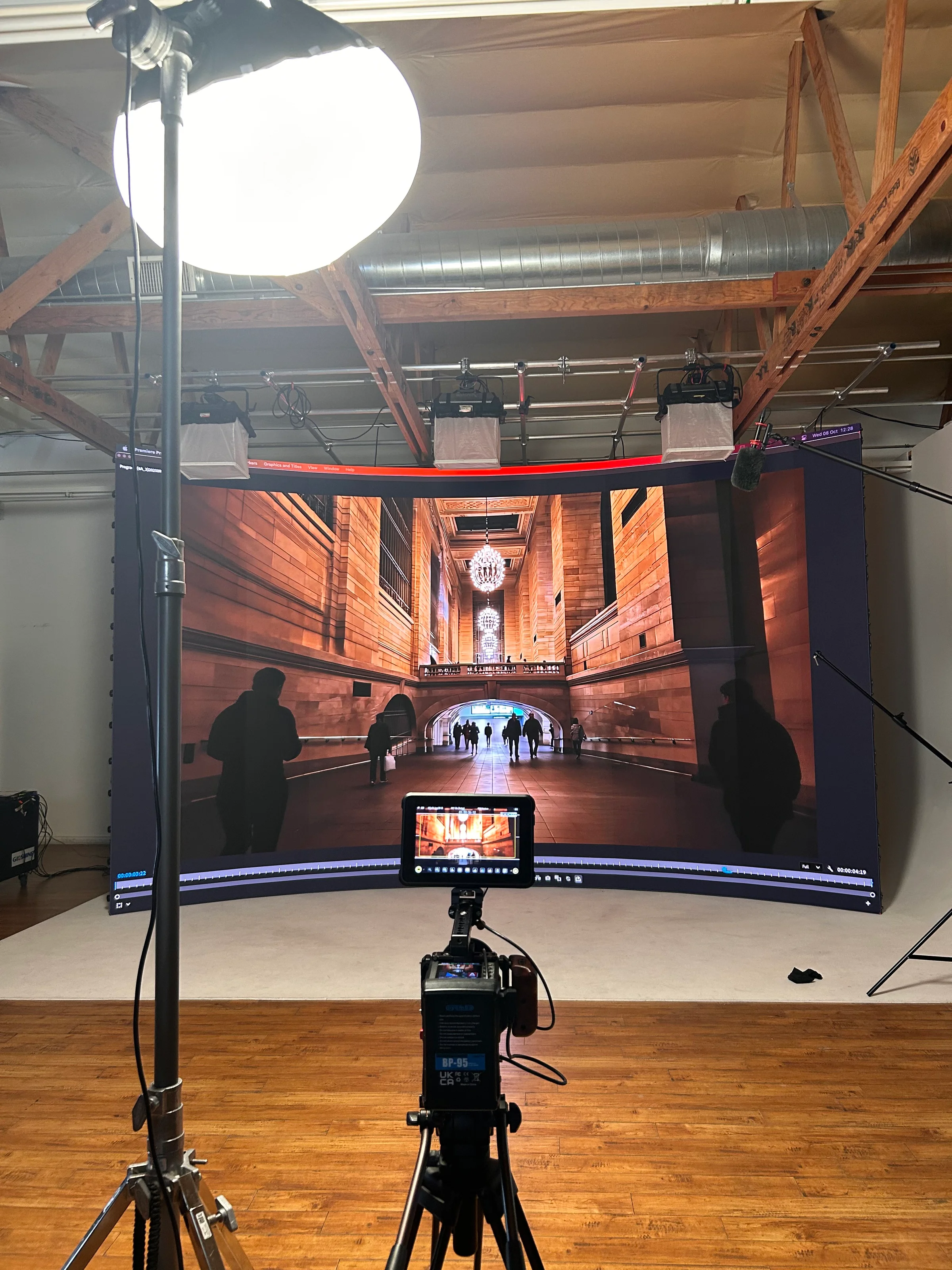
Mark: The Platform includes a sequence set in Grand Central Station, which we shot using an LED volume. We tested Beeble on some of that footage and immediately saw that the relighting could add richness, atmosphere, and a surprising level of realism. It was extremely encouraging.
At the same time, Grand Central is an unusually difficult environment because it’s iconic and instantly recognizable. Very small architectural inconsistencies can break the illusion. That made it a useful test because it showed both where these tools are already incredibly strong and where specific use cases still present challenges.
Have there been smaller, everyday production problems where Beeble has proved useful?
Avi: Absolutely. I interviewed a composer in a very small studio that wasn’t particularly well lit. There was neither the time nor the space to create the kind of lighting setup I would ideally have wanted.
I brought the footage into Beeble and turned something quite flat into an image that felt much more considered and professional.
That wasn’t about creating something fantastical. It solved a very ordinary production problem that filmmakers encounter all the time.
Creative control comes up repeatedly when you talk about AI. Why is that so important?
Mark: Creative control is everything.
AI should execute creative intent; it shouldn’t make the creative decisions.
That’s what I find compelling about Beeble. Understanding what the technology can do informs how you shoot, how you plan production, and how you approach post, but the filmmaker is still making the decisions.
Avi: Filmmaking is ultimately about having a point of view and having taste.
A lot of what these technologies enable was technically possible before, whether that was relighting, replacing backgrounds, or extensive visual effects. But it could require a huge amount of infrastructure, money, and specialist work.
Making those capabilities more accessible gives more filmmakers creative control.
And Beeble feels specifically like a filmmaker’s tool. It isn’t simply asking someone to type a prompt and let a model make all the decisions. It helps bridge the gap between what you practically photographed and what you had in your mind’s eye.
It allows you to keep the cinematography, performance, and creative choices you made on set while continuing to shape the image.
Where would you like to see this approach go next?
Mark: I think resistance around AI is beginning to soften as people understand the breadth of what the technology actually offers. Guardrails around creative rights and training data remain incredibly important, but I think there’s also a growing understanding that these technologies can become legitimate filmmaking tools.
What excites us is giving filmmakers who might not have had access to certain production capabilities the opportunity to make much more ambitious work.
Avi: I’d also love to see more collaboration between AI companies and the existing crafts in filmmaking.
Imagine a lighting artist or gaffer being able to develop their own distinctive approach within these systems, or camera manufacturers integrating AI tools directly into the way filmmakers work on set.
The technical barriers may continue to fall, but the creative part doesn’t disappear. If anything, taste, storytelling, and having something original to say become even more important.
That’s where I think this becomes really interesting.
Finally, what makes Beeble particularly interesting to FilmEvolve?
Mark: When I first met Hoon and learned what Beeble was building, I immediately saw it as an incredibly powerful producer’s tool because it was solving real-world production problems.
We’re now building an AI-native production workflow across our slate, and we see Beeble becoming a foundational technology within that.
There are countless generative tools, and they keep leapfrogging one another. Beeble feels different because it’s addressing very specific filmmaking needs.
It began as something we understood primarily through relighting, but it is becoming much broader: a compositing tool, a VFX tool, and ultimately a production tool.
For filmmakers, that’s incredibly exciting.